

Following the political changes of the late twentieth century, the region underwent a transformation that created several countries sharing closely related cultural roots. Travelling here reveals a different, less-explored Europe, where recent history and cultural diversity coexist in what many consider Europe's least-known region.
Albania remained for decades quite isolated even from other socialist countries.
From Tirana to Skopje: a new itinerary for New Year

The Yugoslav Heritage
The legacy of the former Yugoslavia remains visible in countries such as Montenegro, Kosovo and North Macedonia, which shared a common Balkan history during the second half of the twentieth century. This past lives on in the architecture, customs and a sense of shared identity.
Unlike them, Albania was not part of Yugoslavia and followed its own path as an independent communist state under the Enver Hoxha regime. Even so, it shares with its neighbours a Balkan historical and cultural context that brings coherence to the whole.

A crossroads of civilisations in the Balkans
The legacy of great Western civilisations is visible in Albania, Montenegro, Kosovo and North Macedonia, lands where cultures have met throughout history.
From the Greek and Roman world to Byzantine and Ottoman influences, this legacy is reflected in cities, traditions and ways of life.
In Albania, places such as Butrint and Apollonia reveal this rich history.
Together, these influences explain the cultural diversity and distinctive character of this Balkan region.

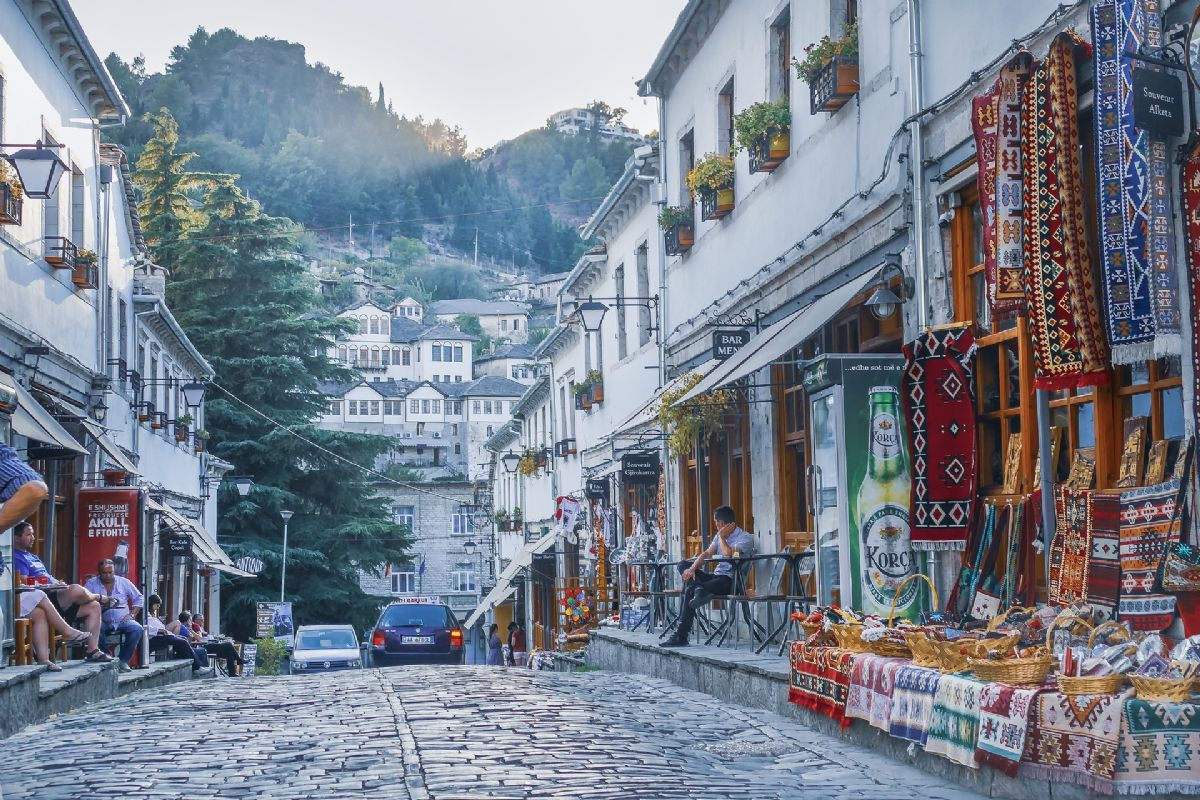
On our routes, this diversity is easy to experience: walking through historic cities such as Berat and Ohrid, exploring old bazaars, Orthodox churches and mosques, or discovering architecture inherited from different periods. In Albania, Butrint and Apollonia reveal this rich history, while in North Macedonia, Lake Ohrid combines cultural heritage with beautiful scenery.

Even on more active itineraries, such as treks in the Dinaric Alps between Albania and Montenegro, history is woven into the landscape through traditional villages, old paths and a way of life that has changed little over time.
A new tour, from Tirana to Skopje
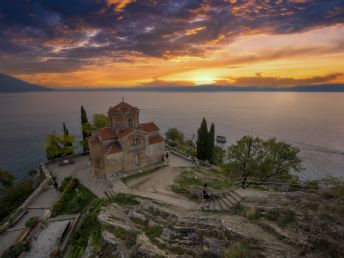
Ohrid, between the lake and history
The new itinerary, day by day
| Day | Route |
|---|---|
| 1 | Flight to Tirana |
| 2 | Tirana → Berat |
| 3 | Berat → Apollonia → Gjirokastra |
| 4 | Gjirokastra → Butrint → Saranda → Gjirokastra |
| 5 | Gjirokastra → Permet → Korça |
| 6 | Korça → St Naum → Elshani → Ohrid |
| 7 | Ohrid → Tetovo → Skopje |
| 8 | Return from Skopje |
What is the best time to travel to the Balkans?
The Western Balkans have a varied climate suitable for travel for much of the year.
Albania’s and Montenegro’s coastal areas have a Mediterranean climate, similar to ours, with warm summers and mild winters. Inland, as in Kosovo and North Macedonia, the climate is more continental, with hot summers and colder winters. In mountain areas such as the Dinaric Alps and Theth Valley, temperatures are lower and conditions can change rapidly.

Spring and early autumn are particularly pleasant for our hiking routes, with mild temperatures, green landscapes and good walking conditions. In summer, although cities and lowlands are warmer, the mountains still offer an ideal climate for outdoor activities.
The best time to visit Albania, what to see, the best beaches and more
Our trips through the Western Balkans

 Albania and Macedonia
✔️ Departures 28 and 29 DEC 2026
✔️ Base price from 1240€ + air taxes (approx. 140€), in a group of 13 to 16 people


✔️ Departures 9, 23 JUN | 7, 21, 28 Jul | 4, 18, 25 Aug | 8, 22 Sep | 6 Oct 2026
✔️ Price from 1440€


✔️ Departures 23 JUN | 21 Jul | 4, 18 Aug | 8, 22 Sep 2026
✔️ Price from 1280€
