
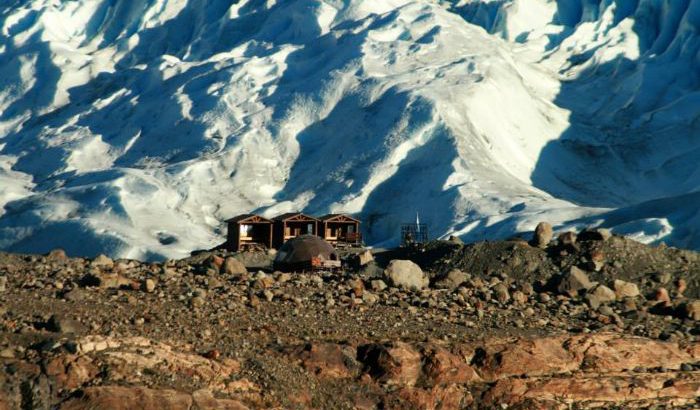
Patagonia is a paradise for mountaineers and nature lovers, but What is the best time of year to travel to Patagonia?. It is a question that has several answers.
Patagonia’s climate is a kaleidoscope: a sunny day can turn into a snowstorm in hours. This variability, typical of the region, defies forecasts and adds an extra touch of adventure to every trip.

It's said of the Patagonia, that you can experience all 4 seasons in 24 hours; a beautiful sunny morning with pleasant temperatures, followed by clouds and strong gusts at midday, rain in the afternoon and snowstorms after dark — all in one day.
The capacity of the Patagonia its ability to surprise us with the weather is part of its charm and a constant reminder of nature’s strength and beauty.
When to travel to Patagonia?
The answer depends on what you seek. During the southern summer (December to February), the temperatures are warmer and the days longer, ideal for exploring the national parks and enjoying outdoor activities. However, if you prefer to avoid crowds and enjoy snowy landscapes, winter (June to August) offers a unique experience, although with cooler temperatures and harsher weather conditions.
The only thing that's certain in Patagonia's climate is that it's unpredictable. We have to be prepared with appropriate clothing and footwear.
At the end of this post, you can see the recommended personal equipment for travel to Patagonia
To define the best time to travel to Patagonia We will divide the year into the 4 seasons to see the best (and worst) of travelling at that time of year.

Travelling to Patagonia in winter: July, August and September
During the European summer, between June and August, Patagonia’s weather is extreme. Most treks require special equipment for snow and ice, and you need to be prepared for snow, hail and extreme cold.
Ushuaia, wrapped in a white mantle, becomes a winter paradise for snow sports lovers.
Until the mid-1930s, South America's southern tip was a vast, uninhabited place where people came to seek their fortune. Patagonia still retains some of that pioneering spirit.
In winter, adverse weather can keep us in our accommodation. We may have to wait 4 or 5 days for the weather to improve before we can leave.
During the winter of Patagonia many trekking refuges close because of snow and cold. For some, however, this is the favourite season, with no visitors and snow-covered dawns. Some even say it is the perfect time to do the trekking in Torres del Paine.

Travelling to Patagonia in spring: October, November and December
The southern spring is the best time of year to book one of our organised trips through Patagonia. Argentina and Chile are in the southern hemisphere, where spring begins in October. At this time, the average temperature is 11°C in Tierra del Fuego and Torres del Paine National Park, in southern Patagonia. In El Calafate, El Chaltén and Valdés Peninsula temperatures are moderate throughout the day.
In the month of October it is still possible to find remains of snow in Ushuaia and contemplate the Fitz Roy mountain range in all its splendor.
The views of Perito Moreno, the El Chaltén area and Torres del Paine, Chile, fill with colour as spring arrives and the winter snow melts.
In spring, almost all summer activities are possible, but with far fewer people. Queues on hiking trails give way to the occasional encounter with fellow walkers.

Traveling to Patagonia in Summer; January, February and March
The high season in Patagonia, and throughout Argentina and Chile, runs between January and February, with supplements and greater difficulty finding accommodation and transport. Everywhere is much busier, and entry to nature parks and national parks is a little more expensive. Days are hot, while nights rarely fall below 0°.
During the Patagonian summer It is possible to do all kinds of activities: kayaking, trekking, horse riding, canyoning, climbing, etc...
For urban tourism lovers summer is also full of activities. Free days in Buenos Aires can be used to visit a multitude of exhibitions and theatres and the city has a tourist bus that travels through the main attractions.


Travelling to Patagonia in autumn: April, May and June
The Patagonia’s autumn colours are a festival. From late April, deciduous trees take on yellow, orange and red hues. The days grow shorter and the air feels colder with each passing day.
The autumn colours and shades in Patagonia are comparable to Japan’s autumn colours; the images look as though they have been retouched in Photoshop.
In autumn, as in winter, we must be prepared for harsh weather, especially from May onwards. Sometimes we may be stranded in a refuge for days cut off by bad weather. On these occasions, we can only wait for a favourable weather window to continue our journey.

Historical average temperatures and rainfall in Ushuaia (ARGENTINA)
Patagonia, with its capricious climate, reminds us of the untamed strength of nature.
In Ushuaia, average temperatures vary significantly throughout the year, with peaks ranging between 4.5°C in July and 13.3°C in January. Precipitation is relatively constant, with a monthly average varying between 37 mm in September and October; and 55 mm in January.
| Jan | Feb | Mar | Apr | May | Jun | Jul | Aug | Sep | Oct | Nov | Dec | |
|---|---|---|---|---|---|---|---|---|---|---|---|---|
| Average(°C) | 9 | 8.7 | 7.6 | 5.4 | 3 | 1.5 | 1.4 | 1.9 | 3.6 | 5.9 | 7 | 8.3 |
| Min. (°C) | 4.7 | 4.3 | 3.3 | 1.5 | -0.4 | -1.5 | -1.7 | -1.3 | -0.1 | 1.6 | 2.6 | 4.2 |
| Max. (°C) | 13.3 | 13.2 | 11.9 | 9.4 | 6.4 | 4.6 | 4.5 | 5.2 | 7.4 | 10.2 | 11.4 | 12.5 |
| Rainfall (mm) | 55 | 50 | 54 | 54 | 53 | 51 | 45 | 47 | 37 | 37 | 48 | 47 |
Historical average temperatures and rainfall in El Calafate (ARGENTINA)
In El Calafate, average temperatures range from 1.4°C in July to 13.2°C in January. Rainfall is lower than in Ushuaia, with monthly averages ranging from 11 mm in November to 31 mm in May.
| Jan | Feb | Mar | Apr | May | Jun | Jul | Aug | Sep | Oct | Nov | Dec | |
|---|---|---|---|---|---|---|---|---|---|---|---|---|
| Average(°C) | 13.2 | 12.6 | 10.5 | 7.5 | 4 | 1.7 | 1.4 | 3.1 | 5.3 | 8.7 | 10.6 | 12.5 |
| Min. (°C) | 8.3 | 7.5 | 5.6 | 3 | 0.5 | -1.9 | -2.2 | -0.6 | 0.9 | 3.2 | 5.1 | 7 |
| Max. (°C) | 18.2 | 17.7 | 15.5 | 12.1 | 7.6 | 5.3 | 5 | 6.8 | 9.8 | 14.3 | 16.2 | 18.1 |
| Rainfall (mm) | 14 | 12 | 17 | 28 | 31 | 24 | 29 | 21 | 18 | 15 | 11 | 14 |
Historical average temperatures and precipitation in El Chaltén (ARGENTINA)
In El Chaltén, average temperatures range from 2.6°C in July to 12.9°C in January. Rainfall is higher than in other areas, peaking at 91 mm in April and falling to 45 mm in November.
| Jan | Feb | Mar | Apr | May | Jun | Jul | Aug | Sep | Oct | Nov | Dec | |
|---|---|---|---|---|---|---|---|---|---|---|---|---|
| Average(°C) | 12.9 | 12.1 | 10.2 | 8 | 4.3 | 2.8 | 2.6 | 3 | 5.4 | 8.3 | 9.7 | 11.6 |
| Min. (°C) | 7.8 | 7.3 | 5.4 | 3.5 | 0.5 | -0.8 | -0.9 | -0.9 | 1.4 | 3.9 | 5.1 | 7 |
| Max. (°C) | 18 | 17 | 15.1 | 12.6 | 8.1 | 6.4 | 6.2 | 7 | 9.4 | 12.8 | 14.4 | 16.3 |
| Rainfall (mm) | 58 | 61 | 67 | 91 | 90 | 87 | 73 | 66 | 49 | 63 | 45 | 50 |
Historical average temperatures and rainfall in Puerto Natales (CHILE)
In Puerto Natales, average temperatures range from 1.5°C in June and July to 11.5°C in January. Rainfall is moderate, with monthly averages ranging from 20 mm in November to 48 mm in March.
| Jan | Feb | Mar | Apr | May | Jun | Jul | Aug | Sep | Oct | Nov | Dec | |
|---|---|---|---|---|---|---|---|---|---|---|---|---|
| Average(°C) | 11.5 | 10.2 | 9 | 7 | 3 | 1.5 | 1.5 | 2.9 | 5.5 | 8.3 | 8.9 | 11 |
| Min. (°C) | 6 | 4.6 | 3.7 | 2.1 | -1 | -2.4 | -2.2 | -1.1 | 0.8 | 2.9 | 3.5 | 5.4 |
| Max. (°C) | 17.1 | 15.9 | 14.3 | 11.9 | 7.1 | 5.5 | 5.3 | 7 | 10.2 | 13.7 | 14.4 | 16.7 |
| Rainfall (mm) | 29 | 40 | 48 | 42 | 35 | 37 | 37 | 23 | 30 | 26 | 20 | 22 |

What's waiting for us there?
- Andean Colossus: Walks under some of the iconic Andes mountains: Fitz Roy, Torres del Paine and Cerro Torre.
- Gauchos and livestock farms: Rural life and livestock farming shape the region’s identity. This is gaucho country, where herds are tended on horseback.

When to travel to Patagonia? | Joan Tecul - Glaciers and ice fields: The ice is impressive. At Perito Moreno Glacier, walkways allow us to get close to its walls.
- Whales and wildlife: Close-up watching of whales and their young. Sub-Arctic marine wildlife and, with some luck, pumas and condors.
Travel to Patagonia
Patagonia is not just mountains and ice. It is an immense region where the wind has its own voice and the landscape changes at every step. There are endless steppes, lakes that look like mirrors and forests full of stories. And yes, besides its beauty, it has culture, myths and a surprising nature. It's the kind of place that traps both adventure seekers and those who want to disconnect and dream for a while.

 Argentina and Chile
✔️ Departure 22 OCT 2026
✔️ Price from 6450€

Travel to Argentina, Bolivia and Chile
An ambitious 3,300 km route through some of South America’s most extreme and beautiful landscapes. An exciting experience, both for its geography and for encounters with Andean peoples.

✔️ Departures 21 JUN | 6 Sep 2026
✔️ Price from 4600€

Travel to Argentina and Chile
A trip walking through Patagonia’s natural landscapes on the trails of Los Glaciares National Park in Argentina (Fitz Roy and Cerro Torre base camp treks) and Torres del Paine in Chile, combined with visits to iconic South American places.

✔️ Departures from El Calafate 07/Nov, 21/Nov, 19/Dec 2026, 16/Jan, 30/Jan, 13/Feb, 27/Feb 2027
✔️ Price from 4450€

Upcoming departures


Recommended personal equipment for travel to Patagonia
In addition to the usual luggage for a hiking route, a trip to Patagonia We cannot forget:
- Backpack for your luggage, weighing no more than 15 kg. There are no porters.
- Daypack for personal belongings.
- Gloves, a fleece or wool hat/balaclava, a neck scarf, 3–4 pairs of thick socks/stockings and gaiters.
- Thermal tops (Thermastat, Polartec…), a fleece or thin jumper (100), a thick fleece (200) or
Polartec 200 fleece, a breathable waterproof jacket (such as Gore-Tex), thermal leggings, trekking trousers, - Breathable waterproof trousers and a rain poncho.
- Waterproof trekking boots or walking shoes (such as Gore-Tex), and spare footwear
UV-filter sunglasses for strong sunlight; high-factor sunscreen and lip protection. - Headtorch with battery.
- Trekking poles (recommended).
- Personal medication, including ointment for sprains and bruises.
In El Chaltén, where the main luggage stays in the village and travellers carry a backpack with clothing, a packed lunch and everything needed for 2 nights of camping.
In Torres del Paine, the general luggage is left in the vehicle of the group, and travellers prepare a backpack for 3 nights of camping.
Our operator provides tents, sleeping bags and dining utensils.
Travel to Patagonia – Jaume Orpinell
Jaume Orpinell sends us this video of his trip to Patagonia, the southernmost geographical region of America and the world. Would you like to watch it?