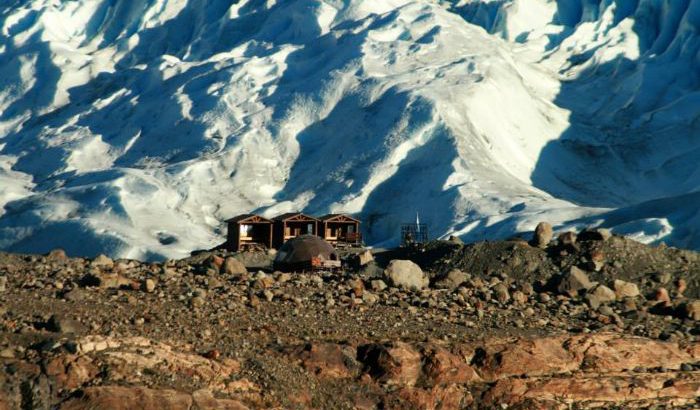
Patagonia is a paradise for mountaineers and nature lovers, but What is the best time of year to travel to Patagonia?. It is a question that has several answers.
Patagonia’s climate is a kaleidoscope: a sunny day can turn into a snowstorm in hours. This variability, typical of the region, defies forecasts and adds an extra touch of adventure to every trip.
The downside of having so many kilometres under your belt is losing your sense of wonder. Our recent trip through the Argentine Puna had exactly the opposite effect.
There we discover an exceptional landscape: vast, immense and almost empty, at more than 4,000 metres above sea level.
Don’t miss this unique opportunity to explore some of the most iconic national parks and experience an authentic Patagonia that retains its pioneering spirit.
Embark on a unique journey walking through the majestic landscapes of Patagonia during the Christmas season.
Designed for trekking and nature lovers, this trip offers the chance to explore some of South America’s most impressive landscapes at a special time of year.
As spring arrives in the southern hemisphere, Patagonia's trekking season begins. Our colleague Yolanda tells us some of his experiences travelling through Patagonia.
Imagine a trip that takes you through some of South America's most impressive and diverse landscapes. The Crossing the Altiplano is an epic route that travels through three countries: Argentina, Bolivia and Chile. This tour will allow you to discover the majesty of the Quebrada de Humahuaca, the immensity of the Salar de Uyuni and the magical aridity of the Atacama Desert.
Did you know that many of our trips have a special discount for the first 4 bookings?
Yes, at Viajes Tuareg we want to reward planning ahead: we thank everyone who books early and is first to pack with a discount ;).
Why a early booking discount? Beyond the obvious marketing appeal, having the names of all participants confirmed makes it much easier to arrange services. Domestic flights, better hotel rooms, higher-category vehicles and even the accompanying local guide must all be carefully selected when organising an itinerary, and availability is a decisive factor when booking these services.
The Antarctic continent is a remote and unspoilt area. A travel to Antarctica is neither simple nor economical But it is unlikely to leave anyone who ventures to these latitudes unmoved. Icebergs, glaciers, scientific bases and incredible wildlife await visitors who venture beyond 60° south.
With the arrival of summer, coastal areas are free of ice which allows the ships to leave. A period of five months between November and March when weather conditions are more favourable and where more than 20 hours of sunlight a day for activities.
In November, the Antarctic Circumpolar Current begins to moderate temperatures throughout the southern hemisphere. The Drake Passage offers windows of weather when it is possible to reach Antarctica without facing 10-metre waves.
Antarctica in NOVEMBER and early DECEMBER
Late spring and early summer in the southern hemisphere. The continent is covered in snow, and the pack ice begins to break up. At this time of year, Antarctica is a wonderful white landscape, with abundant icebergs and sea ice.
Sunlight encourages abundant phytoplankton growth, attracting marine mammals to feed near the coast.
It is penguin mating season, and birds are laying their eggs.
Midsummer in the southern hemisphere. During this period, the warmest of the year, The snow melts, revealing rocks and tundra that allows us to go for walks.
Almost round-the-clock daylight delights photography enthusiasts.
Less sea ice means easier access to more distant areas. Seal and sea lion pups can be seen. Penguin chicks hatch, and their parents spend hours feeding them.
End of summer and beginning of autumn in the southern hemisphere. Antarctica is preparing for winter. It's the period when the sea ice reaches its smallest extent, allowing access to the most remote areas. It is also the ideal time for activities on land, with less snow.
The whales return to feed and it is the best time to observe them; seals and elephant seals rest on land, and penguins moult.
The Circumpolar Current forms part of the great ocean circulation driven by changes in water temperature. The coldest water flows along the ocean floor towards the equator, while warm surface waters from tropical latitudes flow upwards to replace the colder water that sinks.
The Antarctic Circumpolar Current flows from west to east, counterbalancing the opposite direction of all subtropical currents in an area called the Antarctic Convergence,
an area of approximately 40 km where the waters sink northwards towards the Atlantic, Pacific and Indian oceans.
The Antarctic Circumpolar Current carries more water than was thought
We use necessary cookies to remember your preferences. With your permission, we use Google Analytics to measure visits and display videos, maps and other third-party content that may use cookies. You can accept, reject or choose which cookies to allow.