The Svalbard archipelago is the northernmost European territory accessible to a non-professional expedition. Fjords, glaciers and abundant wildlife — polar bears, walruses, migratory birds… — await visitors during the short polar summer. This fascinating land in Europe’s remote north opens to visitors for that brief season.
Greenland remains one of the wildest and most unexplored territories in the Arctic. In summer the ice formed during the long winter nights melts and allows us access to the fjords, an incomparable natural spectacle formed by the erosion of the great glaciers that existed in the times when these lands were covered with ice.
The Antarctic continent is a remote and unspoilt area. A travel to Antarctica is neither simple nor economical But it is unlikely to leave anyone who ventures to these latitudes unmoved. Icebergs, glaciers, scientific bases and incredible wildlife await visitors who venture beyond 60° south.
With the arrival of summer, coastal areas are free of ice which allows the ships to leave. A period of five months between November and March when weather conditions are more favourable and where more than 20 hours of sunlight a day for activities.
In November, the Antarctic Circumpolar Current begins to moderate temperatures throughout the southern hemisphere. The Drake Passage offers windows of weather when it is possible to reach Antarctica without facing 10-metre waves.
Antarctica in NOVEMBER and early DECEMBER
Late spring and early summer in the southern hemisphere. The continent is covered in snow, and the pack ice begins to break up. At this time of year, Antarctica is a wonderful white landscape, with abundant icebergs and sea ice.
Sunlight encourages abundant phytoplankton growth, attracting marine mammals to feed near the coast.
It is penguin mating season, and birds are laying their eggs.
Midsummer in the southern hemisphere. During this period, the warmest of the year, The snow melts, revealing rocks and tundra that allows us to go for walks.
Almost round-the-clock daylight delights photography enthusiasts.
Less sea ice means easier access to more distant areas. Seal and sea lion pups can be seen. Penguin chicks hatch, and their parents spend hours feeding them.
End of summer and beginning of autumn in the southern hemisphere. Antarctica is preparing for winter. It's the period when the sea ice reaches its smallest extent, allowing access to the most remote areas. It is also the ideal time for activities on land, with less snow.
The whales return to feed and it is the best time to observe them; seals and elephant seals rest on land, and penguins moult.
The Circumpolar Current forms part of the great ocean circulation driven by changes in water temperature. The coldest water flows along the ocean floor towards the equator, while warm surface waters from tropical latitudes flow upwards to replace the colder water that sinks.
The Antarctic Circumpolar Current flows from west to east, counterbalancing the opposite direction of all subtropical currents in an area called the Antarctic Convergence,
an area of approximately 40 km where the waters sink northwards towards the Atlantic, Pacific and Indian oceans.
The Antarctic Circumpolar Current carries more water than was thought
Zimbabwe or Zimbabue? Kirguistán or Kyrgyzstan? Thailandia or Tailandia?
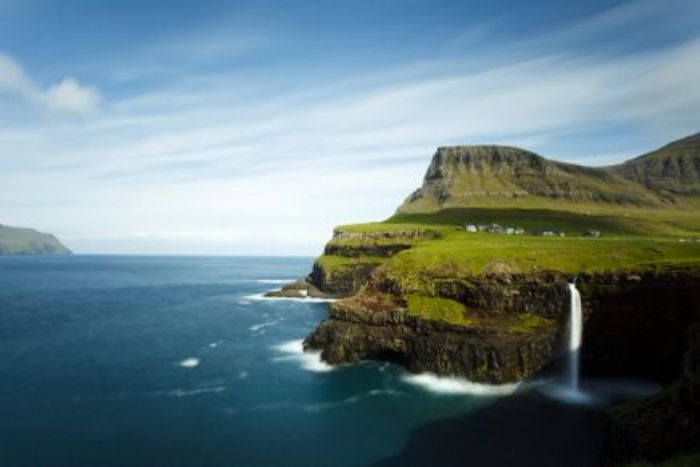
It is not always easy to decide how to spell our next destination. On one of our standout trips for 2015, Northern Lights and a Total Solar Eclipse in the islands Faroe, We thought the right name was Faroe.
We have posted a simple survey on Facebook to hear your views: http://goo.gl/5k2lyT
Group cancellations that leave a boat available; dates when expected bookings do not materialise... Bad news for organisers, but a unique opportunity to travel at a good price to one of the planet's last unspoilt regions: Antarctica.
“LOW COST” // Jan Veen
Click here for EXTRAORDINARY offers (by Antarctic standards) on expedition cruises aboard the M/V Ortelius for the coming winter months of 2014.
The M/V Ortelius is an excellent vessel for polar expeditions, with a reinforced hull that allows it to reach remote areas inaccessible to other ships Antarctic cruises. Want to know more about M/V Orteluis? Click Here.
The sophisticated M/V Plancius anchors in a sheltered bay and becomes a base camp for activities that go beyond the usual Antarctic excursions: mountaineering (easy climbing), camping on the continent, long walks, kayaking and diving beneath the ice.
ACCOMMODATION IN ANTARCTICA One night on the mainland. We go ashore after dinner with a sleeping mat, a polar sleeping bag and bivouac equipment. Food and fuel for heating are not permitted on the Antarctic continent; shared supplies consist of tents, drinks and emergency rations. The adventure ends at breakfast. Spending the night in the continent’s vast solitude is a nature experience that is hard to match.
We use necessary cookies to remember your preferences. With your permission, we use Google Analytics to measure visits and display videos, maps and other third-party content that may use cookies. You can accept, reject or choose which cookies to allow.