
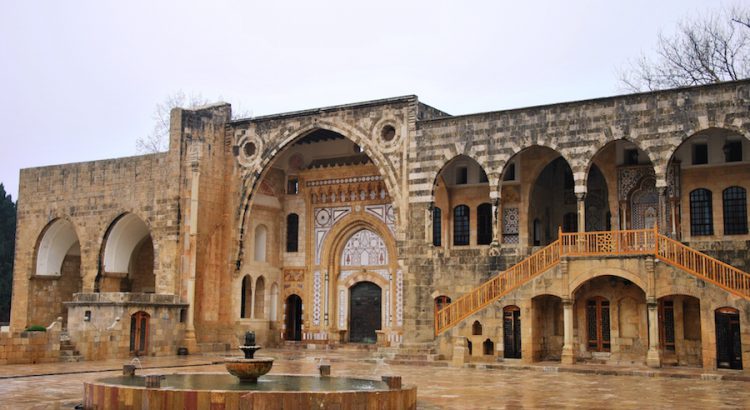
From the first steps of civilization and the golden age of Phoenician cities of Sidon, Tyre, Beirut and Byblos, to the remains of the medieval Crusades in Tripoli, passing through the glorious Roman past of Baalbeck and the flourishing Islamic era, Lebanon was always the door of Asia and the East or the last Asian port for others.
Here are 5 reasons to choose it as your destination

5 reasons to visit Lebanon
Lebanon is not a particularly popular destination among travellers, which is a shame. It is a tiny country, about the size of Asturias, with great historical significance.
A tour of Beirut
Beirut cannot be seen; it hides among half-collapsed buildings, with its bullet-riddled walls, impossible sidewalks and traffic that can drive anyone to distraction. Covered with hijabs and miniskirts in bodies reconstructed by scalpel, like the towers sharing city blocks with the remains of the French colonial modernism. Perhaps that is why travellers become hooked, clinging to the here and now like survivors.

Baalbeck
Baalbeck is one of those places you have to see at least once in your life. The magnificent complex of Roman temples overlooking the centre of Baalbek is one of the main archaeological attractions of Middle East.

Jeita Grotto
An essential stop, the Jeita Grotto is a cavern – more like two caves – made of limestone, whose lower section can only be visited in small boats, as it is an underground river of drinking water for the inhabitants of the country while in the upper cave one can walk and contemplate the different shapes and tones formed in a natural way.

Sidon and Tyre
Sidon, 27 miles along the coast from the capital, is another key stop, home to a Crusader fortress and an ancient city whose maze of alleys is full of interesting shops. And Tyre, about 37 kilometers south of Sidon, is a dusty wonder, which houses the archaeological site of Al Mina, where the ghosts of the Roman Empire pass beneath majestic arches and between fallen columns, while the Mediterranean extends beyond.

Getting to know the national tree: cedar
The cedar is the native tree of the Lebanon: you are in your flag and in its coat of arms and is the national symbol. This impressive tree symbolises immortality because of its exceptional longevity. Cedar is also believed to have spiritual properties that help you listen to the messages coming from within.

Upcoming trips to Lebanon
From the beginnings of civilisation and the Phoenician golden age – Sidon, Tyre, Beirut and Byblos – to the remains of the medieval Crusades in Tripoli, via the glorious Roman past of Baalbek and the flourishing Islamic era, Lebanon has played a significant historical role.
 Lebanon
✔️ Departure 17 SEP > 1, 8, 22 OCT > 12 NOV > 3 DEC 2023
✔️ Price from 895€
✔️ Departure 15 OCT > 5 NOV > 3 DEC 2023
✔️ Price from 990€
