
Discover southern Angola through traditional communities, desert, dunes, the Atlantic and Iona National Park.
Angola is one of those African destinations that is still off the usual routes. A huge country, diverse and little visited, where the landscape changes from the mountains and highlands of the interior to the arid territories of the southwest, where the desert reaches practically to the Atlantic.
Our trip to southern Angola explores this remote region, combining adventure, nature and encounter with traditional communities, on a 15-day expedition combining hotels, camping and 4×4 travel.
Southern Angola: remote territory
The expedition begins in Lubango, capital of Huíla province and the gateway to some of the country’s least-known areas.
From here we leave the conventional routes behind and head towards small towns, local markets and villages where traditional lifestyles continue to play a key role in the day-to-day life of communities.
The route crosses places like Cahama, Humbe and Oncocua, before returning to Lubango and continuing towards Namibe and the desert of Virei.
Meeting traditional communities
One of the great attractions of this expedition is the opportunity to meet different communities in southern Angola.
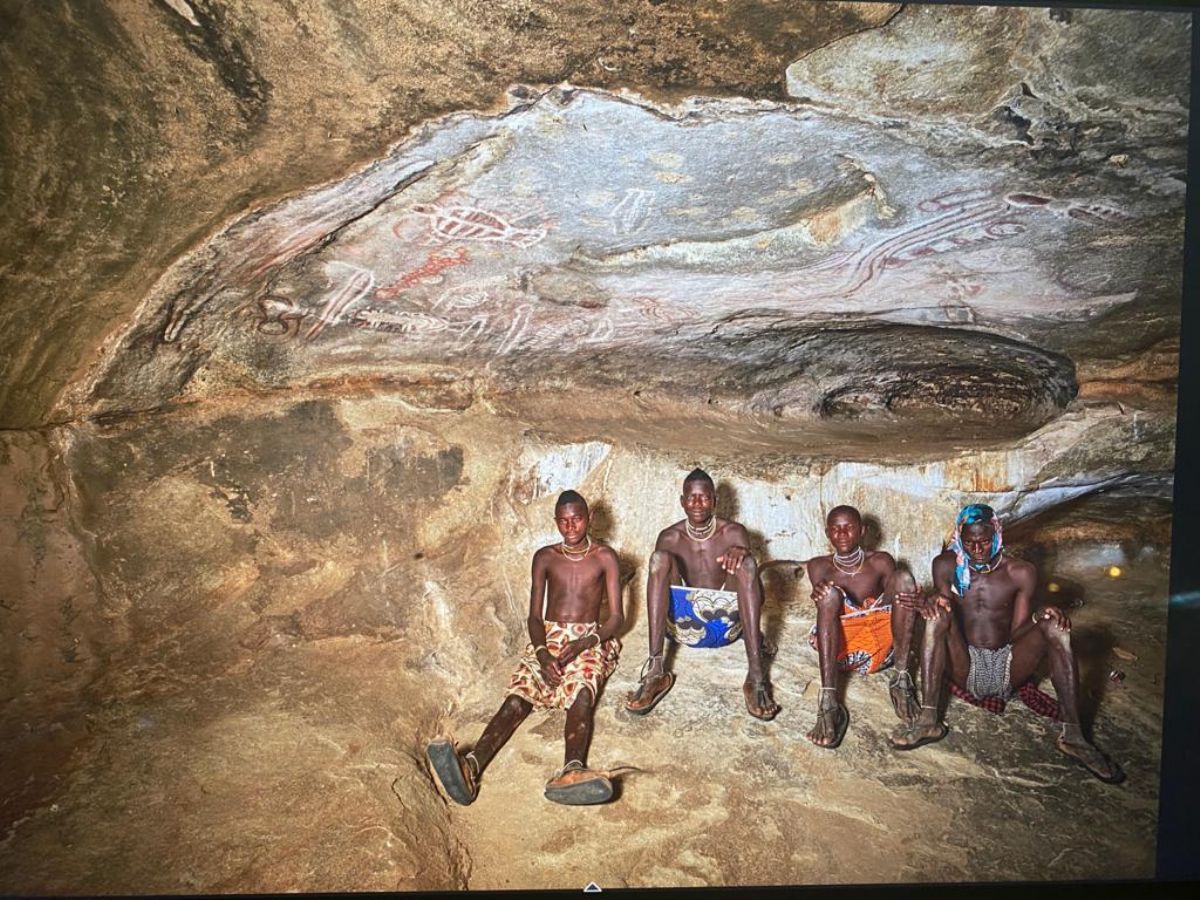
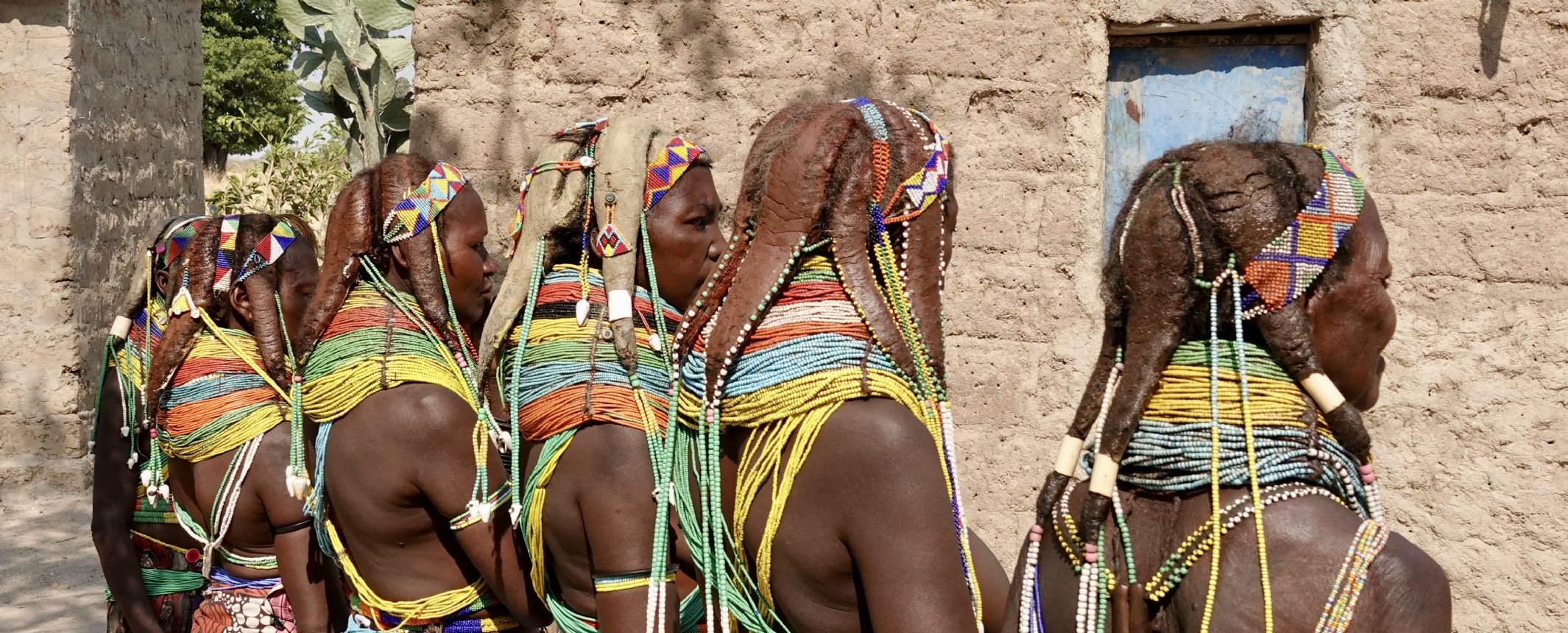
During the first days we will visit villages Ovahimba, Ovankhumbi, Ovangambwe and Ovatwa, among other communities in the region.
These communities’ ways of life are closely linked to the land, livestock and traditions passed down through generations. We approach these encounters respectfully, understanding that we are meeting real communities rather than attending staged visits.
Ovahimba: ochre, tradition and territory
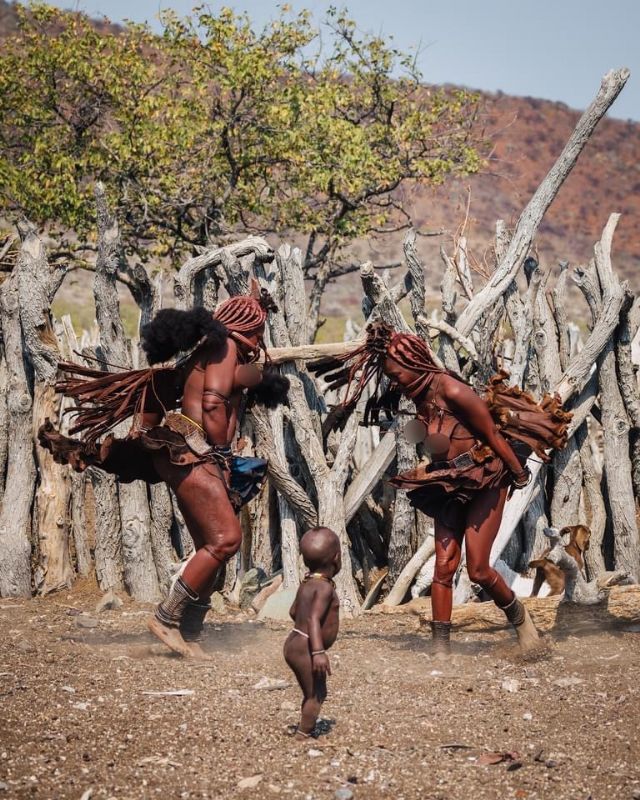
In Ovahimba villages, we can observe some of the most characteristic elements of these communities’ culture, such as the use of otjize, a mixture of cow fat, ash and ochre with which women cover their skin.
Their elaborate hairstyles, covered in the same ochre paste, are also striking.
Markets in Southern Angola
Local markets are an essential part of the route.
In Quihita, we will visit a small traditional market that still attracts few tourists, while in Curoca we will discover an old market beside rock formations and ancient riverbeds.
These are places where daily life, trade and local traditions meet.
From the Lubango Mountains to the Desert
The landscape changes progressively as we move towards the southwest.
Before reaching the coast, we will pass through Lubango, where the viewpoint of Tundavala offers spectacular panoramic views from the top of the escarpment, more than 1,000 metres above the region’s plains and mountains.
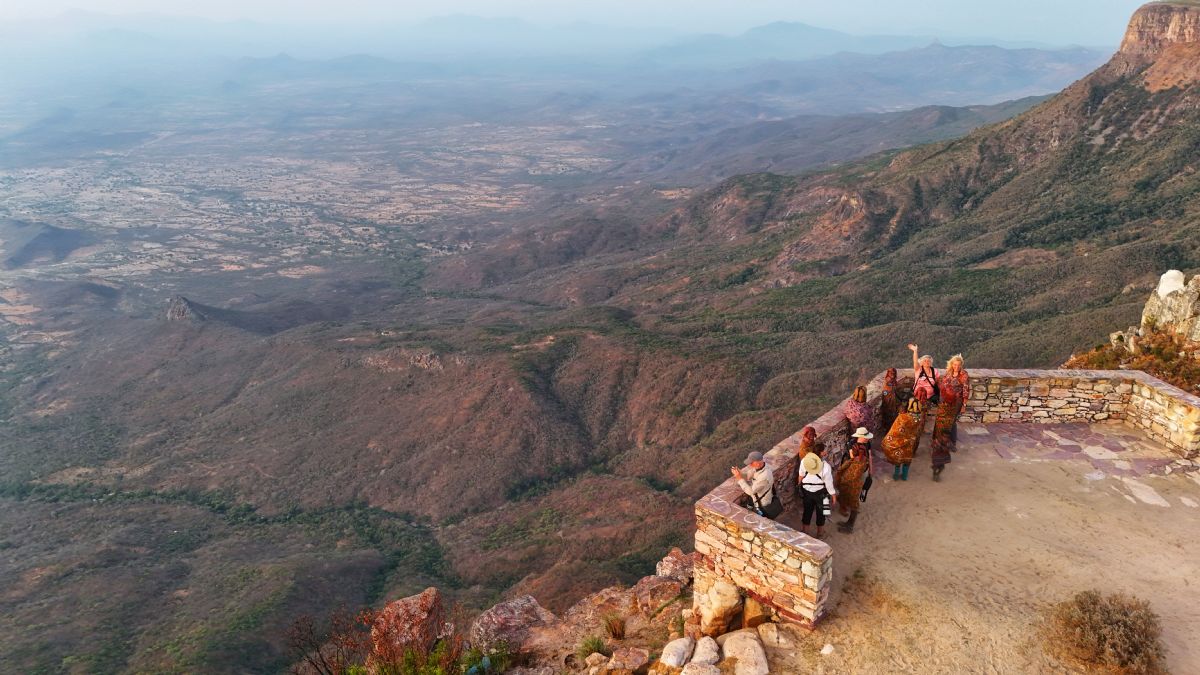
From Lubango we descend to Namibe, a city situated in an exceptional setting, between the Atlantic Ocean and the Namib Desert.
Namibe also retains a strong Portuguese heritage, visible in its colonial architecture, streets and markets.
When the desert meets the ocean
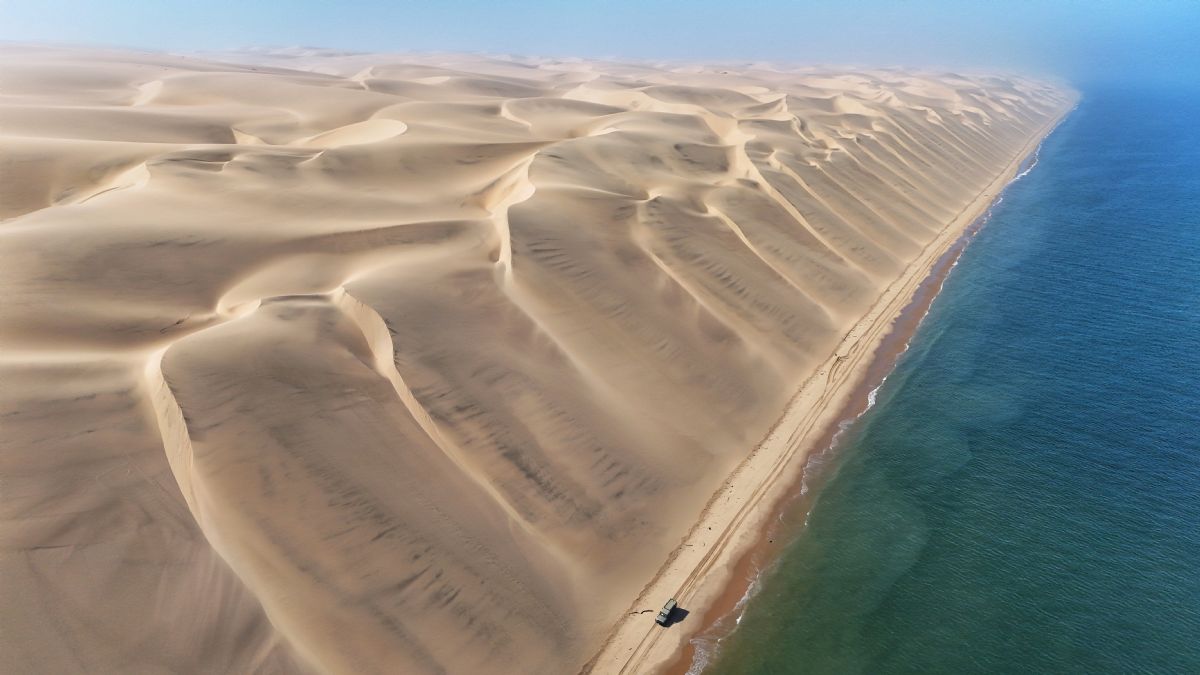
One of the most special moments of the trip arrives when entering the Iona National Park.
This huge protected area in southwestern Angola combines desert landscapes, wildlife adapted to arid conditions and a virtually untouched coast.
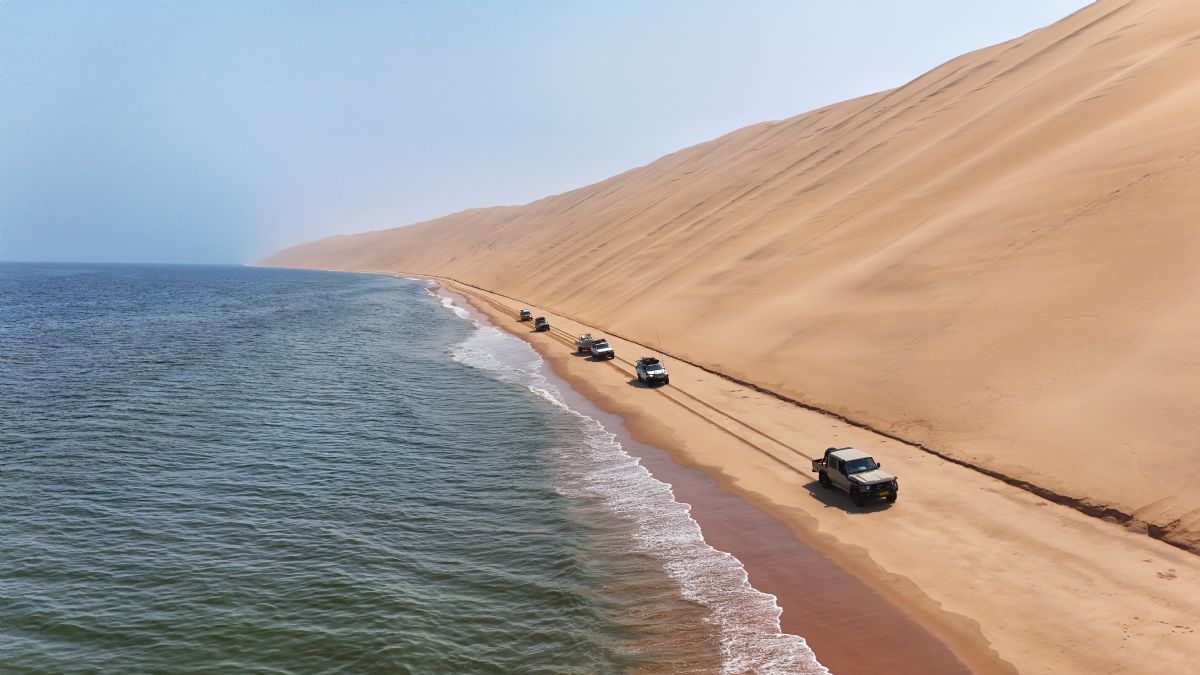
The route follows tracks and stretches of beach to reach our camp among the dunes. Here the landscape takes on a special dimension: sand, desert and Atlantic Ocean on the same horizon.
Ilha dos Tigres
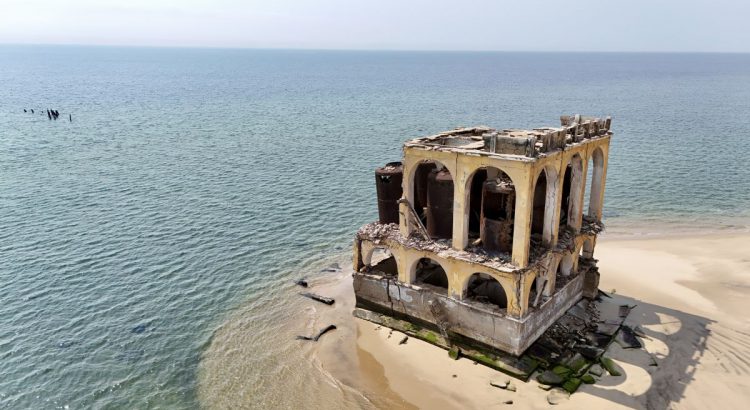
From Iona we will travel along the coast to the Ilha dos Tigres, an ancient peninsula that was isolated from the continent after a natural rupture transformed its connection to land.
There we will visit the remains of São Martinho dos Tigres, an old fishing settlement abandoned in 1974.
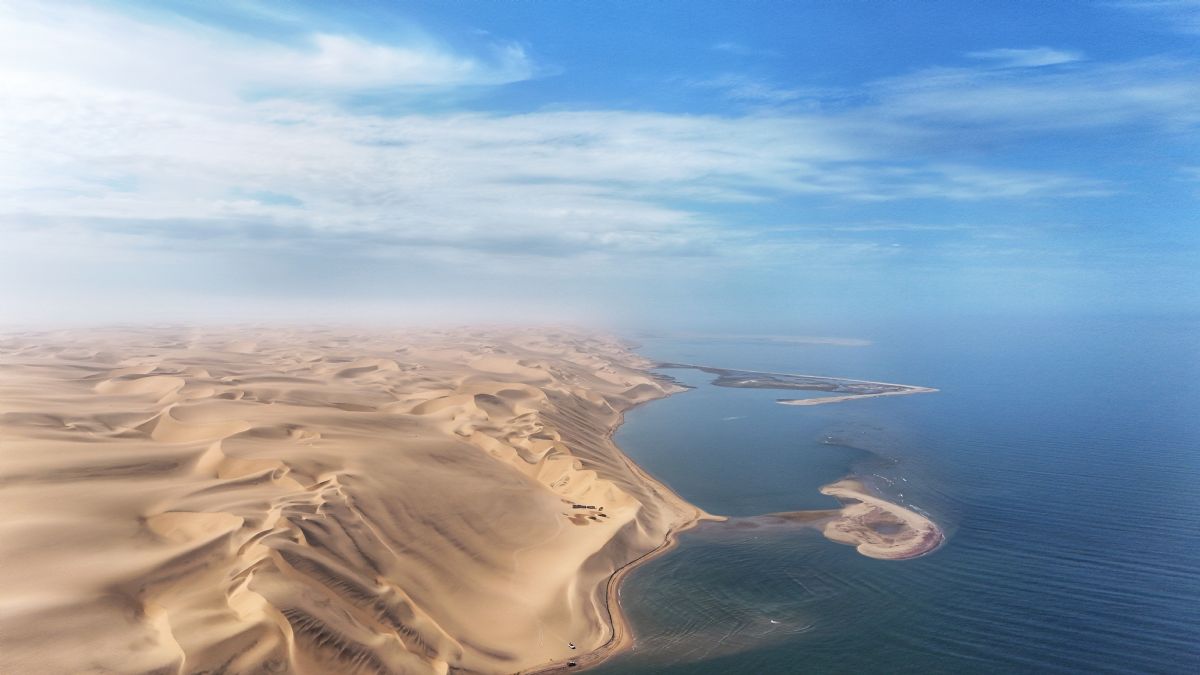
Among the ruins, old buildings, streets and the airstrip can still be made out as the desert advances over the former settlement.
It is one of those places that makes travelling through Angola so different from visiting a more conventional African destination.
Dunes, rock formations and extreme landscapes
The route continues along the coast and the desert until Tombua, Arco and Curoca.
In Arco we will find eroded sandstone formations and an inland lake, while camping nights allow us to enjoy the landscape when the sun disappears and temperatures fall.
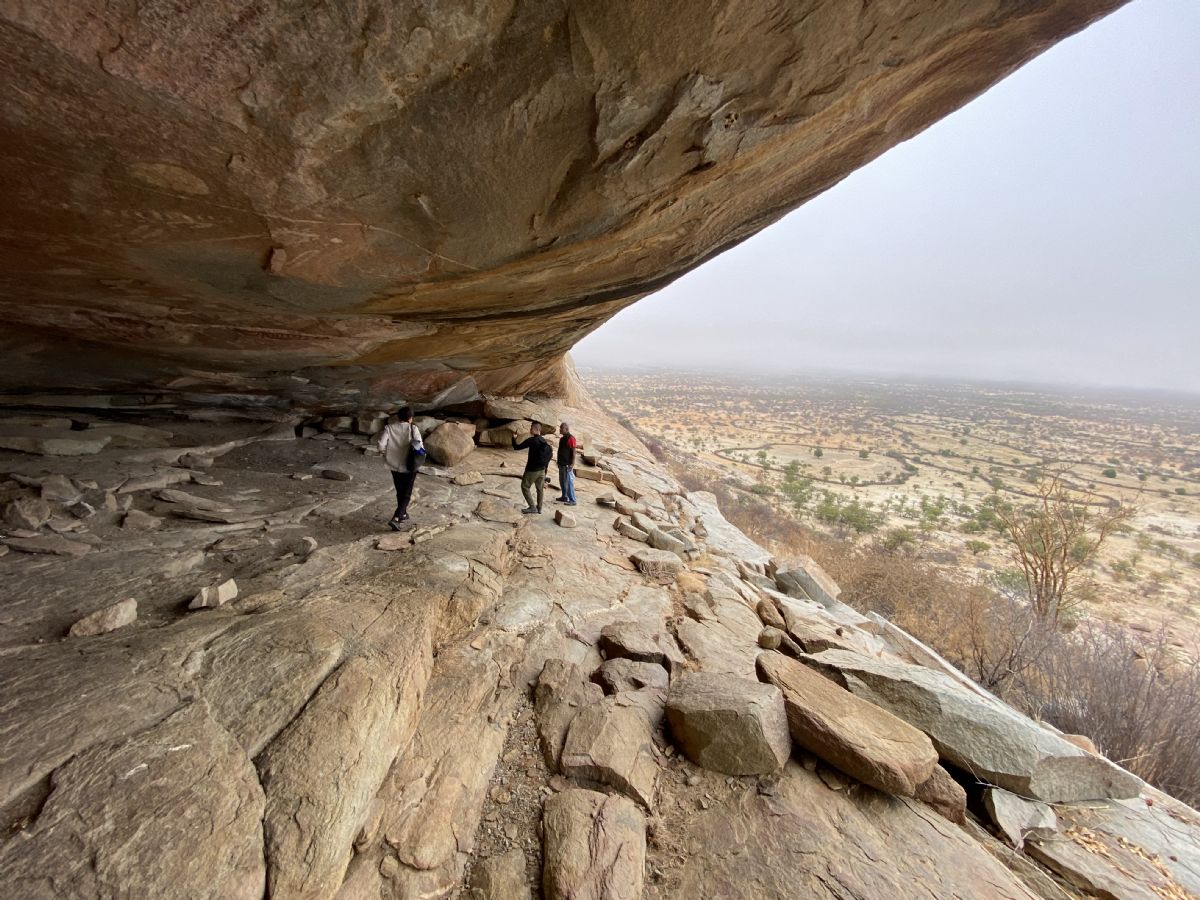
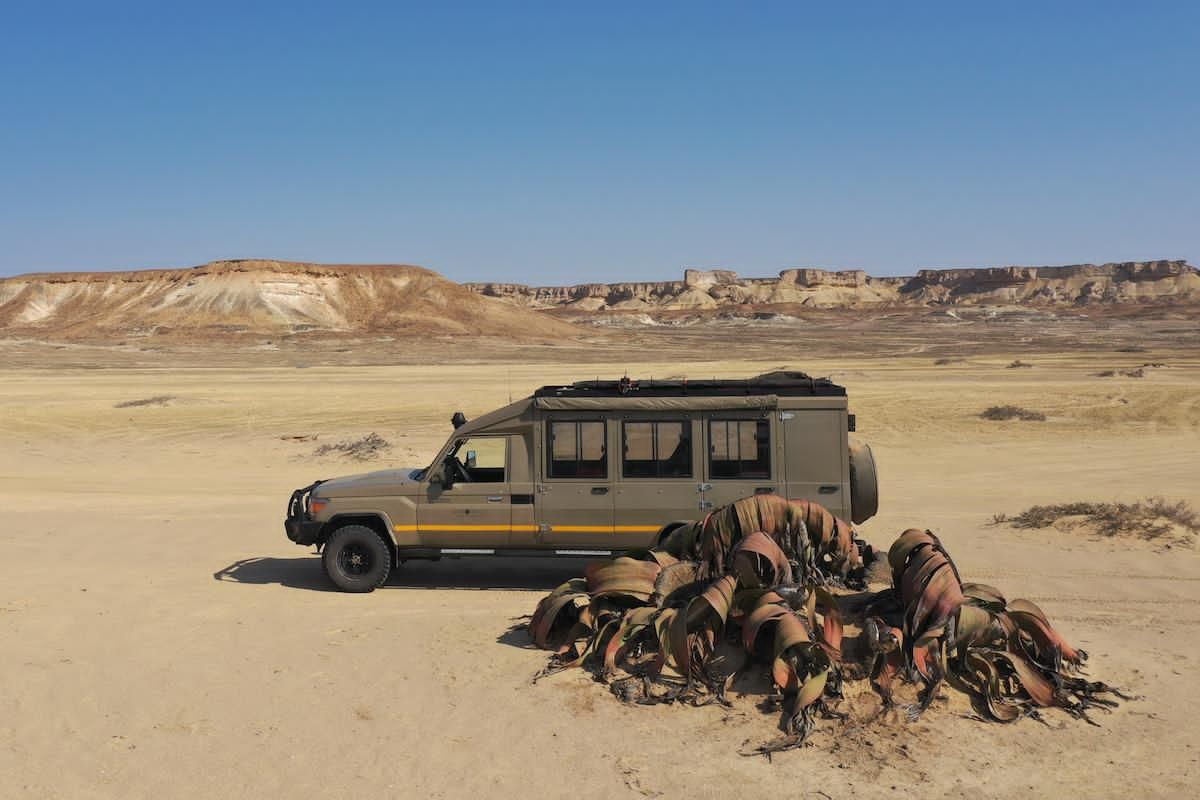
On the return to Namibe there is another natural element characteristic of this region: Welwitschia mirabilis, an ancient plant endemic to the Namib Desert.
An expedition for travellers with an adventurous spirit
Travelling through southern Angola requires a different approach from a conventional trip.
Tourism infrastructure and services are still developing, and the tour includes long 4×4 journeys, nights camping and basic conditions at times.
The reward is access to little-explored territories and a travel experience centred on nature, culture and contact with local communities.
The expedition uses specially adapted 4×4 vehicles, and accommodation combines 8 nights camping and 4 nights in hotels, with tents, mattresses and camping equipment provided by the organisers.
15 days to discover a different Angola
The full route brings together different sides of the south of the country:
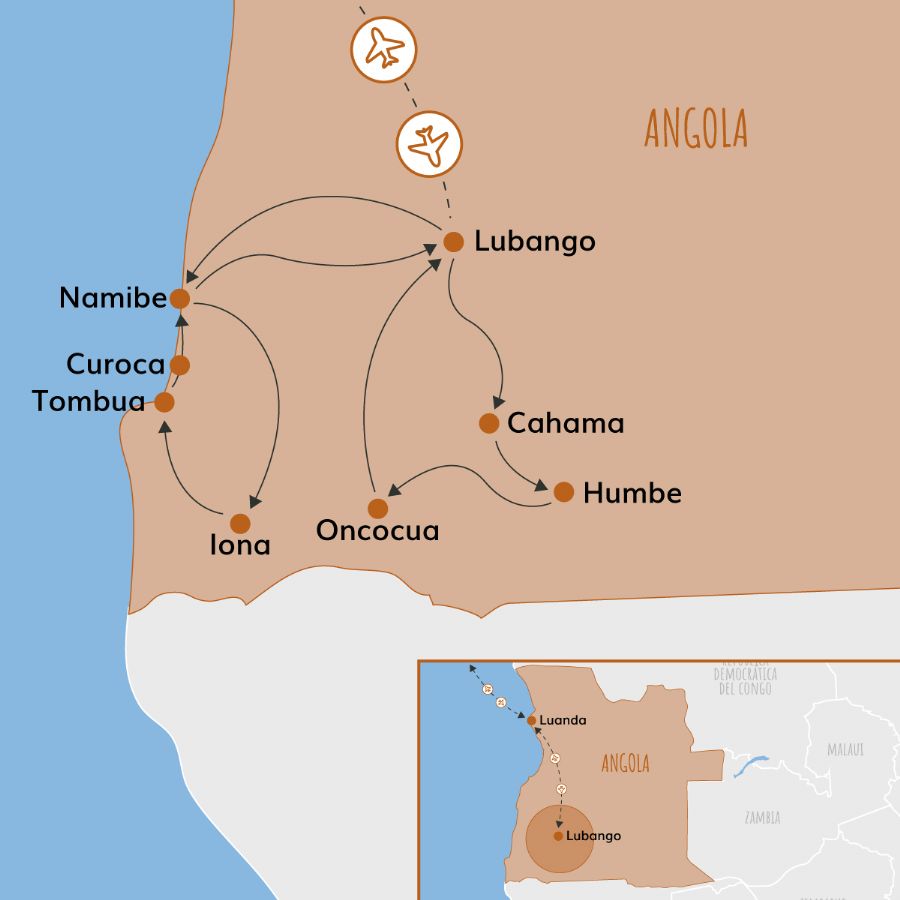
Lubango → Cahama → Humbe → Oncocua → Lubango → Namibe → Virei Desert → Iona National Park → Ilha dos Tigres → Curoca → Namibe → Lubango → Luanda.
It is not a trip designed for those looking for comfort or a conventional tourist route. It's a expedition to southern Angola, for travelers interested in discovering remote territories, little-known landscapes and cultures that maintain a strong identity.
Travel to southern Angola in 2026
 Angola
✔️ Departure 14 NOV 2026
✔️ Price from 5470€
Why travel to southern Angola?
- To discover one of the least explored destinations in Africa.
- To learn about traditional communities in southern Angola.
- Explore the Virei Desert and Iona National Park.
- To see where the desert meets the Atlantic Ocean.
- To visit remote Ilha dos Tigres.
- To sleep in camps in the middle of nature.
- To explore southwestern Angola in 4×4 vehicles.
- Experience an unusual expedition, far from the usual tourist routes.