

You can travel to Madagascar all year round, but there are clearly more recommended times depending on what you want to do and the area you want to visit. In addition, between January and March there may be cyclones, especially on the east and north coasts.
Although you can visit all year round, the dry season is often considered the best.

What is the best month to travel to Madagascar?
In Madagascar there is no single valid answer when we talk about the best time to travel. The island is so large and diverse that the climate changes a lot between the west, the Highlands, the eastern jungle or the remote southern coasts. Therefore, rather than talking about “the best month to travel,” the most useful thing is to understand which time works best.
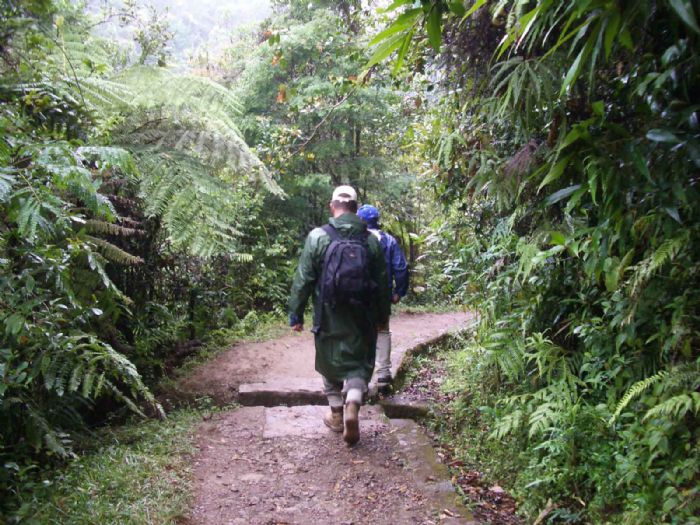
What is the best time to travel to Madagascar?
We can say that the dry season (from May to October) offers the most stable weather and allows travel around the whole island with few logistical complications.
On our Madagascar routes, travelling by 4×4 on little-used roads and tracks, the climate plays a key role. During the rainy season, the dirt tracks become difficult or impassable, the rivers grow quickly and the general logistics of the trip becomes unpredictable, with restricted access to some parks and remote areas.
The dry season offers much more stable and safe conditions to fully enjoy the experience.

Seasons of the Year in Madagascar
What is Madagascar’s weather like? In general, the island has two main seasons that shape the year and influence how our trip unfolds.
- Rainy season: approximately November-April. This is when the weather is hotter and more humid, with frequent rain, especially in the east.
| Area / Route | Average temperature | Rain |
|---|---|---|
| Antananarivo (Highlands) | 18–25°C | 🌧️🌧️🌧️🌧️ |
| West (Tsiribihina, Tsingy, Morondava) | 25–32°C | 🌧️🌧️🌧️ |
| South (Isalo, Zombitse) | 24–34°C | 🌧️🌧️ |
| South-west coast (Belo sur Mer, Ambatomilo) | 26–35°C | 🌧️🌧️ |
- Dry season: of May to October, with more stable weather, more accessible roads and better travel conditions.
| Area / Route | Average temperature | Rain |
|---|---|---|
| Antananarivo | 14–22°C | 🌧️ |
| West (Tsiribihina, Tsingy, Morondava) | 20–30°C | 🌧️ |
| South (Isalo, Zombitse) | 18–28°C | 🌧️ |
| Southwest coast | 22–32°C | 🌧️ |
Temperatures and rainfall in Madagascar
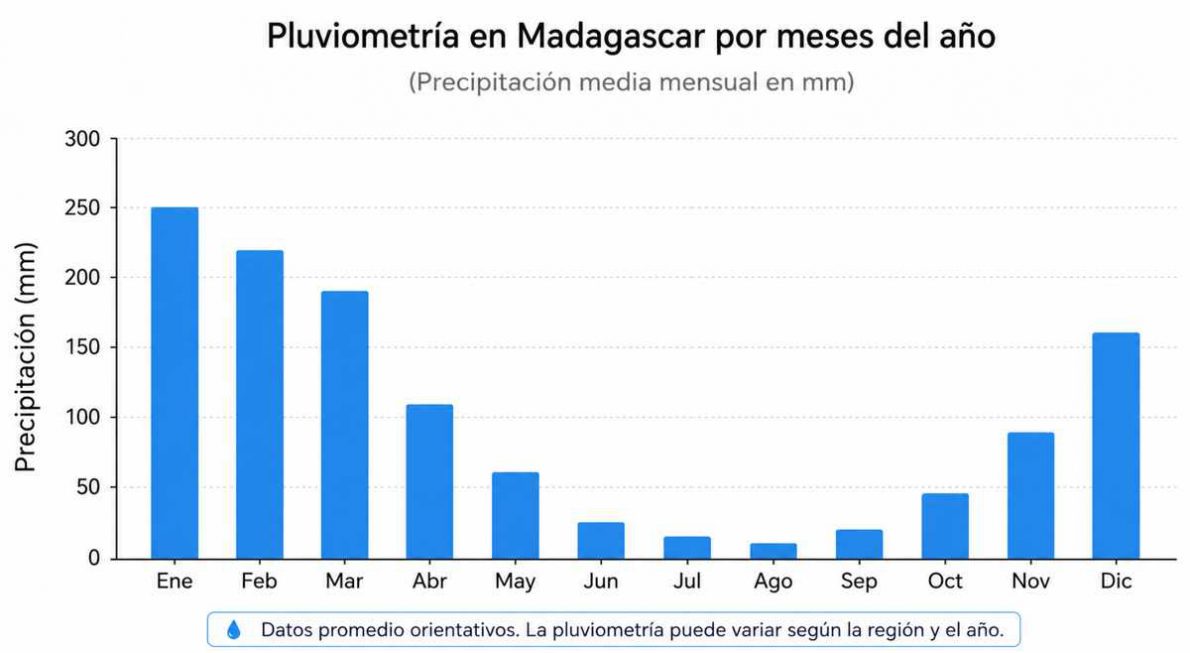
The following chart shows Madagascar’s average rainfall throughout the year, peaking between January and March and lowest during the southern winter. The figures are indicative and were obtained using AI.
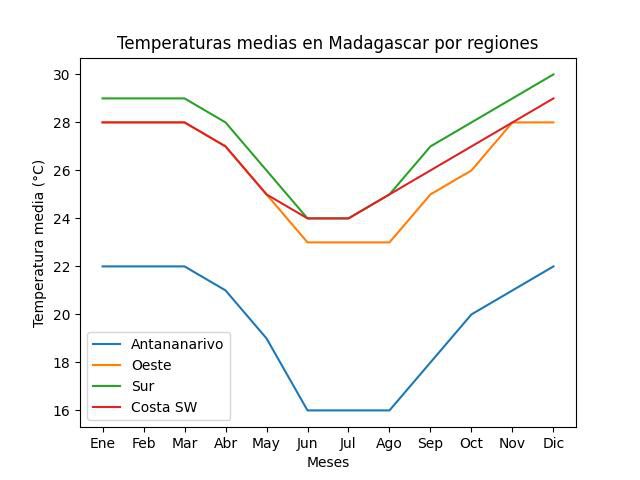
Temperatures vary across Madagascar: the Highlands are cooler, while the west, south and south-west coast remain warm year-round. Winter (June–August) is milder and drier, while summer brings the highest temperatures nationwide.
Travelling to Madagascar in summer
Our summer coincides with the dry season, bringing more stable weather, less rain and pleasant temperatures. This matters in Madagascar, where many journeys use dirt tracks in 4×4 vehicles and road conditions can change significantly with the weather.
It is also the best time to explore itineraries such as the descent of the Tsiribihina river, visit the Great Tsingys of Bemaraha, explore the Isalo National Park or enjoy the remote beaches of the southwest, as access is easier and conditions are safer and more predictable.

During the dry season, wildlife is easier to spot in many parks. Although less green than in the rainy season, the landscapes offer clear skies and good conditions for photography and trekking.
Travel to Madagascar in October
The 2 October departure is one of the year’s best options for discovering Madagascar in low season. It coincides with the end of the dry season, so the weather remains stable with little rain, but temperatures are warmer than in the southern winter.

This is the ideal time to explore the west, when the Tsiribihina River is navigable and access to the Tsingy of Bemaraha remains passable before the first rains. It is also a good time for southern routes, such as Isalo or Zombitse, where the heat is not yet extreme.
On the southwest coast, Belo sur Mer and Ambatomilo offer a quieter atmosphere with fewer tourists.
In addition, October has the advantage of being a month of transition: the landscape remains dry but starts to gain some freshness and dynamism before the rainy season.
How do global phenomena affect them?
Madagascar is directly influenced by the Indian Ocean Dipole (IOD) and the southwest Indian Ocean cyclone season (November to April). Global climate phenomena such as El Niño and La Niña do not directly affect Madagascar as they do the Americas or the Pacific, but they indirectly influence the southwestern Indian Ocean climate around the island.
These global phenomena “modulate” the intensity of rains or cyclones in certain years.
The Indian Ocean Dipole
A climate phenomenon caused by variations in sea temperature between the western and eastern Indian Ocean.
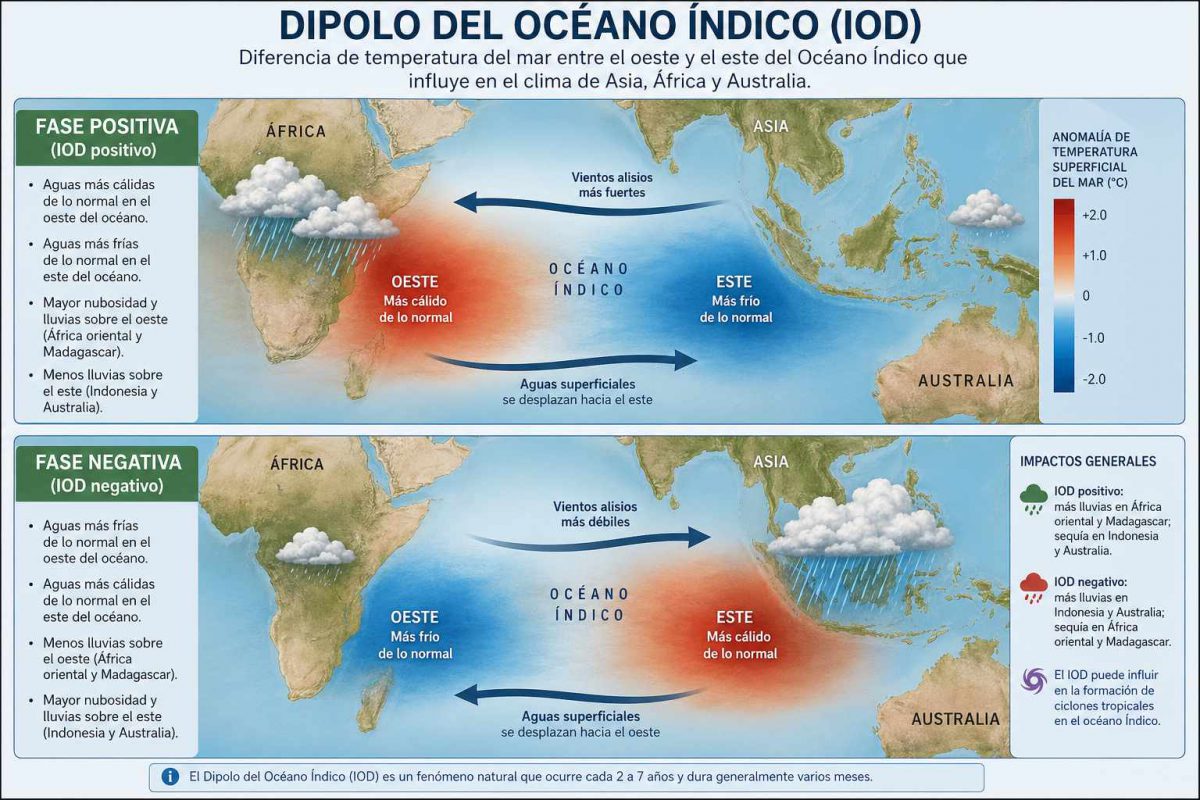
When these temperatures become unbalanced, wind and rainfall patterns change across the region. A positive phase can bring more rain to the west, while a negative phase shifts it eastwards.
The IOD does not work as a clock, but as a climate oscillation influenced by other systems such as El Niño and La Niña, which makes its behavior difficult to predict well in advance.
The IOD does not define Madagascar's seasons, but it can intensify the rainy season and cyclone activity.

Travelling through Madagascar

Travelling by vehicle through Madagascar
Almost all stages on roads or tracks are different from each other, with some visiting different aspects of the country en route — villages, markets, cities, national parks and reserves — and others simply sand follows dusty tracks or winding roads between stops on the circuit. Although the scenery will leave an impression in 100% of cases.
We do not normally travel at night, except on days when we stop to watch the sunset beforehand.
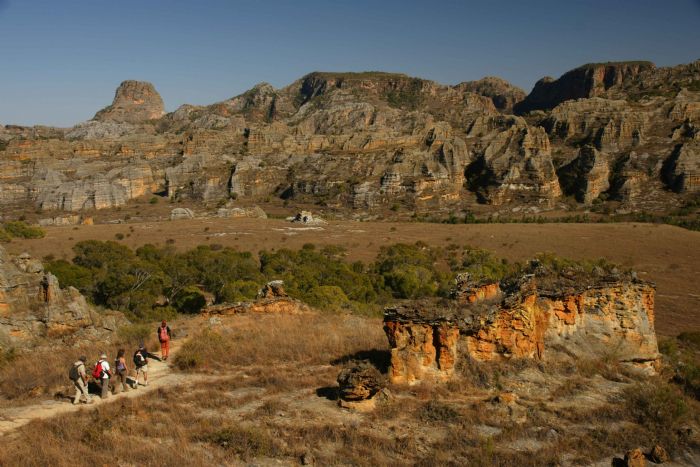
Travel on Madagascar's roads and tracks is slower than in Europe, so we always need to allow for an average of 50 km/hour (on winding paved roads) and between 25 and 30 km/h (on sandy tracks). Bear in mind that the island’s main roads, such as the RN7 — especially in the Highlands between Fianarantsoa and Antananarivo — are busy with lorries, shared taxis (taxi-brousse), carts of every kind, zebu herds, children, bicycles and more.
‘Timetables in Madagascar’: Mora mora
In Madagascar, “mora mora” is often heard when delays or logistics are beyond one’s control (roads, weather, etc.).
All journey times in our website’s day-by-day itineraries are approximate and They will depend heavily on traffic., the state of tracks and roads, possible checkpoints, comfort stops requested by travellers and so on. These estimated times exclude visits and meals.

On 80% of the stages of our routes, we set off early in the morning and reach the next hotel or lodge before nightfall.
In Madagascar, the best travel advice is simple: mora mora.
Our trips to Madagascar
 Madagascar
✔️ Departure 29 JUL | 2 Oct 2026
✔️ Price from 4350€
This trip explores the remotest corners of this island continent: observing lemur species in parks and reserves, western baobabs and Bemaraha’s spectacular limestone formations, and meeting local people in colourful markets. A unique combination of landscapes and experiences for the most adventurous spirits!

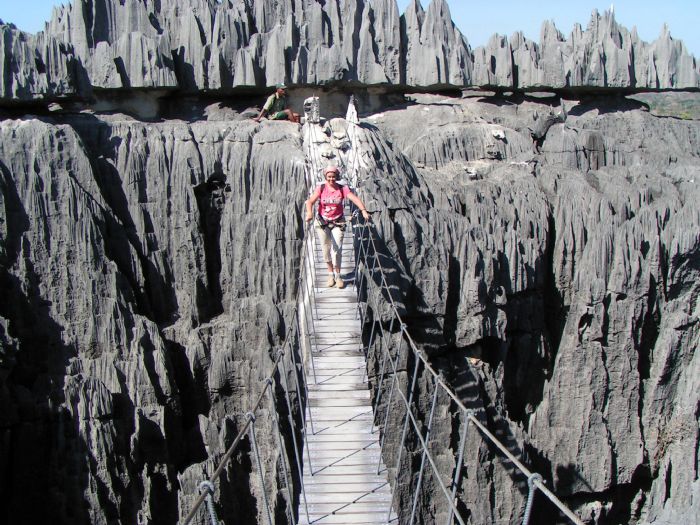
✔️ Departure 6, 27 JUL | 3, 10, 31 AUG 2026
✔️ Price from 3127€
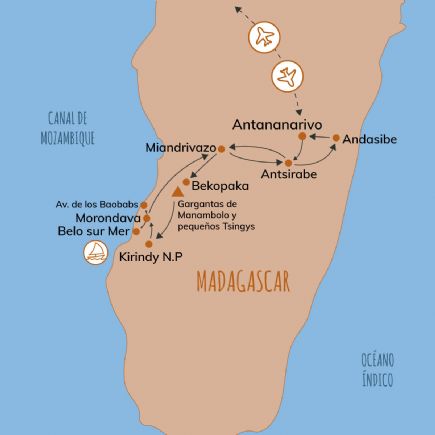
Upcoming departures
| Month | Route | Departure | Days |
| July | Remote River Expedition | 06/07 | 19 days |
| July | Remote River Expedition | 27/07 | 19 days |
| July | The Madagascar experience. Tsingy, west coast and southern crossing. | 29/07 | 24 days |
| August | Remote River Expedition | 03/08 | 19 days |
| August | Remote River Expedition | 10/08 | 19 days |
| August | Remote River Expedition | 31/08 | 19 days |
| October | The Madagascar experience. Tsingy, west coast and southern crossing. | 02/10 | 24 days |

Frequently Asked Questions about Climate in Madagascar
Can you travel to Madagascar all year round?
Although possible, it is not advisable to travel during the rainy season, from January to March. The best time is the dry season (from May to October), when temperatures are pleasant and all national infrastructures and parks are accessible.
What is the best month to travel to Madagascar?
September and October are considered the best months. The weather is pleasant, rain is scarce, and two incredible natural events coincide: humpback whale sightings and the birth of baby lemurs.
Can the cyclone season affect our journey?
Yes. Cyclone season, between January and March, mainly affects the east coast. Flights may be cancelled and roads blocked. Most routes do not operate at this time.
How are the roads during the rainy season?
Madagascar’s road network is fragile. During the rains (November to March), mud makes many dirt tracks impassable. Places such as the Tsingy de Bemaraha are inaccessible until the roads dry out.
When is the best time to see lemurs and whales?
July to September is ideal for watching humpback whales. If you want to see lemurs, October and November are ideal, as young lemurs are often clinging to their mothers’ backs.
What temperatures can you expect in different parts of Madagascar?
The climate varies greatly. In the highlands, including Antananarivo, July and August nights can be cold (10°C). Coastal areas such as Nosy Be and Morondava are tropical and warm, staying between 25°C and 30°C almost all year.
Is it advisable to travel to Madagascar in July and August?
Yes, this is the peak season. The dry weather is perfect for trekking in national parks. As it is the southern winter, however, remember warm clothing for nights at higher altitudes.
What is the cheapest time to travel?
May, June and November are considered shoulder season. Weather remains favourable for travel, and it is easier to find good flight prices and hotel availability than in August or at Christmas.