
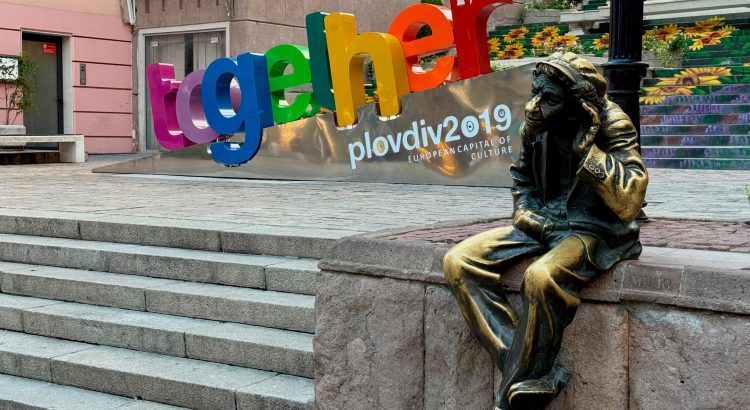
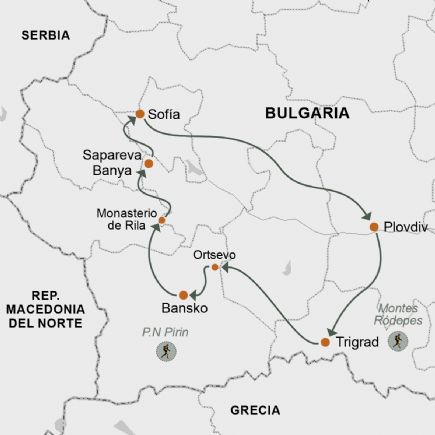
An excellent option for travellers who want to combine exploring the history and culture of Bulgaria with nature and outdoors. In this trip to Bulgaria We will explore the streets of Sofia and Plovdiv, visit rural villages such as Bansko and Trigrad, and follow spectacular trails in the Balkan foothills, the heart of the Rhodopes and Pirin and Rila national parks.

The visit of the most important Orthodox monasteries in the country, Bachkovo and Rila, will allow us to witness the history of Bulgaria.
Upcoming departures to Bulgaria
| Route | Departure | Dur. |
Classic Bulgaria and Southern National Parks |
01/06 | 10 days |
Classical Bulgaria and National Parks South |
22/06 | 10 days |
Classical Bulgaria and National Parks South |
20/07 | 10 days |
Trekking in the Rila and Pirin massifs |
23/07 | 9 days |
Classical Bulgaria and National Parks South |
17/08 | 10 days |
Trekking in the Rila and Pirin massifs |
17/09 | 9 days |
Classical Bulgaria and National Parks South |
21/09 | 10 days |
Highlights of the trip
- Sofia and Plovdiv
Today’s modern, cosmopolitan cities played key roles in Europe’s past and recent history, as their ruins and architecture show. - Nature and landscapes
Easy walks discovering the vegetation and landscapes of the Balkan Mountains, the Rhodopes and southern Bulgaria’s national parks. - Orthodox monasteries
Located in strategic locations, the Rila and Bachkovo Monasteries are the most important in the country, with impressive frescoes inside.
Monastery of Rila
It is the most important pilgrimage center of Bulgaria and one of the Balkans’ most famous Orthodox monasteries. Over 1000 years old and UNESCO-listed, it was founded by the hermit St John (Ivan) of Rila, later canonised by the Orthodox Church. Successive empires protected it, and it served as a important role in the spiritual and social life of medieval Bulgaria.

Day-by-day itinerary
| Route | Meals | Accommodation | |
| 1 | Flight from departure city to Sofia | | | Hotel |
| 2 | Sofia – Sveti Spass Monastery – Karlovo – Kalofer | D | C | Local hotel |
| 3 | Kalofer – Byala Reka eco-trail – Kazanlak – Plovdiv | D | Hotel |
| 4 | Plovdiv (visits) | D | A | Hotel |
| 5 | Plovdiv – Monastery of Bachkovo – Shiroka Laka – Trigrad | D | C | Local hotel |
| 6 | Trigrad – Devil’s Throat – Banichan – Bansko | D | Local hotel |
| 7 | Bansko – Mount Pirin – Bansko | D | Local hotel |
| 8 | Bansko – Monastery of Rila – Sofia | D | A | Hotel |
| 9 | Sofia (visits) | D | Hotel |
| 10 | Sofia – City of origin | D | | |
| D – Breakfast | A – Lunch | C – Dinner | |||
An unexpected encounter in the heart of Bulgaria
Walking Sofia’s cobbled old-town streets, fascinated by the mix of cultures and architecture around us, we turn into a small alley with no fixed destination.
Suddenly, an irresistible aroma of spices led our group to a small tea shop. We stepped inside, drawn by the scent, and found colourful tea jars, porcelain teapots and traditional Bulgarian objects.
Behind the counter, a smiling elderly woman was serving local customers. We approached shyly and ordered a traditional tea in basic English. With a friendly look, she suggested rose tea, a regional speciality.
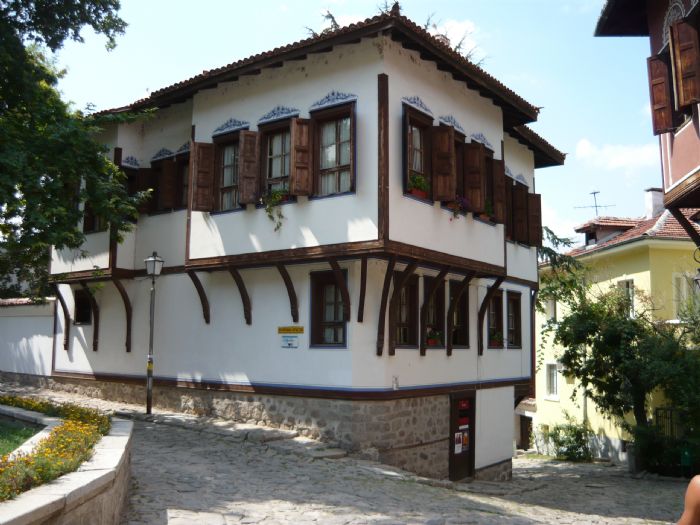
We accepted the recommendation and, while waiting for tea, two group members admired the shop’s decor: old photographs of Sofia and objects from Bulgarian culture. Noticing their interest, the elderly woman joined us, asking a younger woman to see departing local customers out. For more than two hours, she told stories of the city, its traditions and people in English that, though hesitant, was perfectly understandable.
We were all captivated by the elderly woman’s stories. Rose tea in delicate porcelain cups completed the experience, each sip drawing us deeper into Bulgaria’s culture and soul.
Saying goodbye, we thanked them for their kindness and hospitality, and for sharing a fascinating culture.
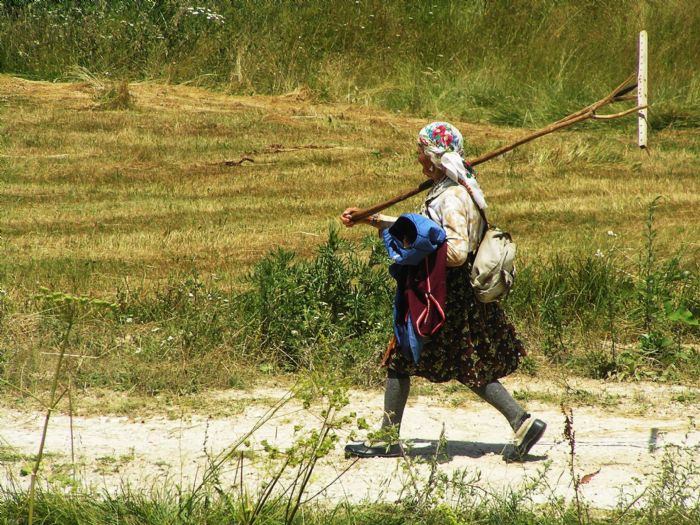
Our trip to Bulgaria
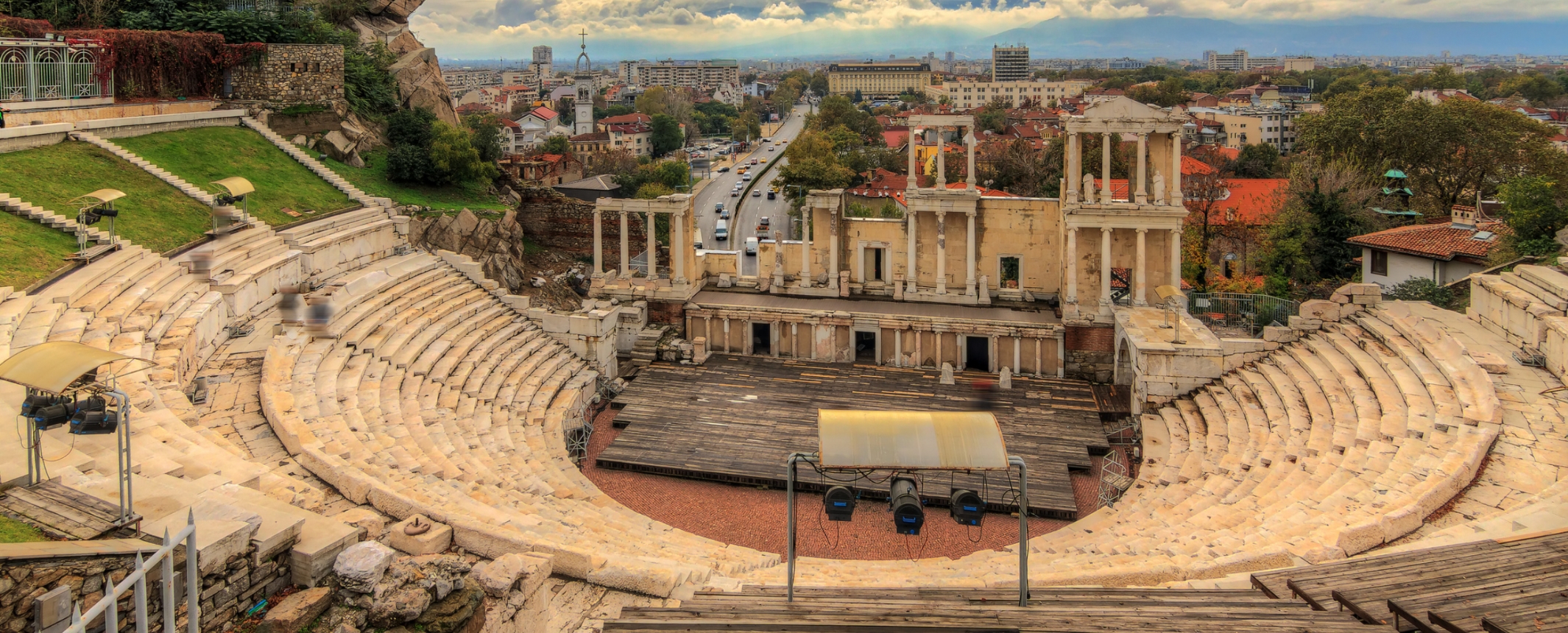
 Bulgaria
✔️ Departures 2, 30 JUN > 21 Jul > 4 Aug > 1 Sep 2024
✔️ Price from 1760€
Our trekking in Bulgaria
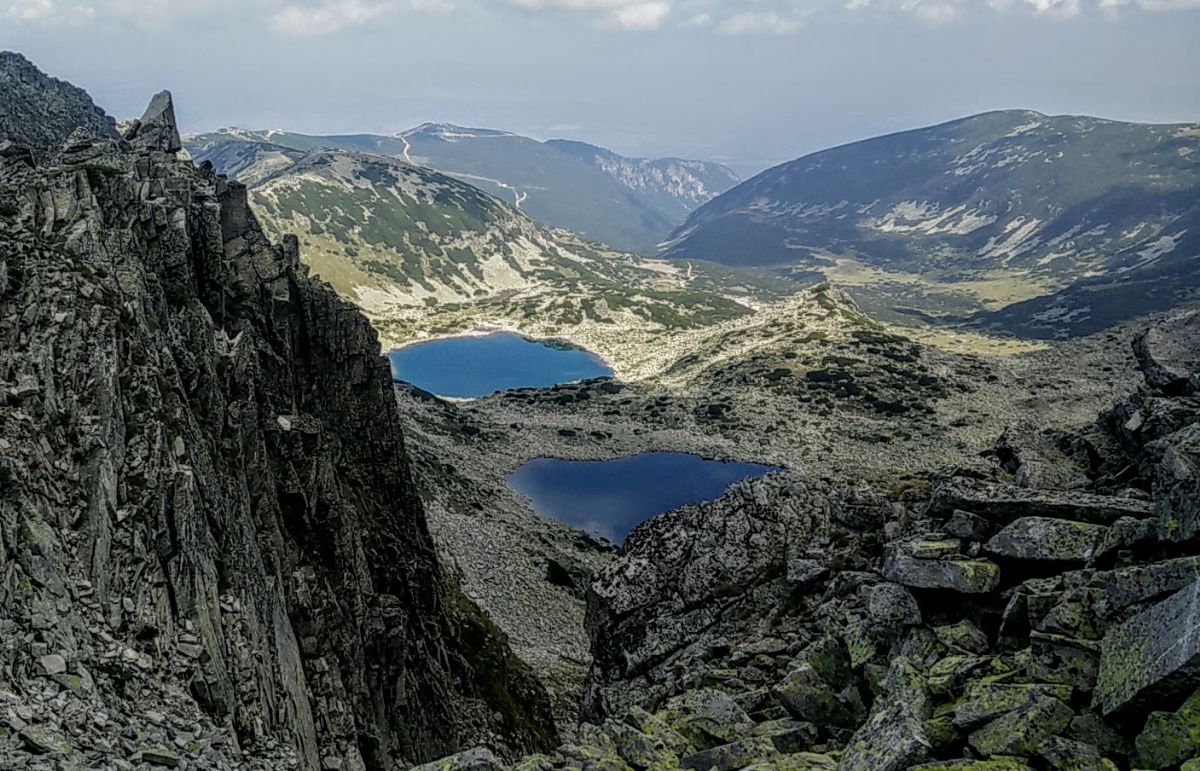
✔️ Departures 23 JUL | 17 Sep 2026
✔️ Price from 1690€
Additional comment
The walking stages are indicative and may change on the ground. The local guide may adapt them to the group, terrain and weather. As the expert who knows the area, the guide decides what is best for the group in the circumstances.