

The bridges are built to connect, and perhaps that is why we like them so much. Since the first ones appeared bridges in Bronze Age Greece, humans have kept building these structures, trying to bridge the distances between us. There are so many bridges that we have built, that today they represent an immense cultural heritage, treasures that tell us about history, culture and science. Undoubtedly, great platforms worth travel.
That's why we wanted to look at different bridges that we find in some of the countries we visit regularly. Here we go.
1 – Shuanglong Bridge, Yunnan, China.

Also known as «The Bridge of the Two Dragons«, this bridge was built during the Qing dynasty in the 17th century. It originally had 3 arches and was expanded in 1939 because of increased river flow. Today, it is 148 metres long and has 17 arches. There are three pavilions along the walkway: the main one in the centre and two at the ends. Its fine craftsmanship and harmony with the surrounding landscape make it one of the finest bridges of ancient China.
2 – U Bein Bridge, Myanmar (Burma)
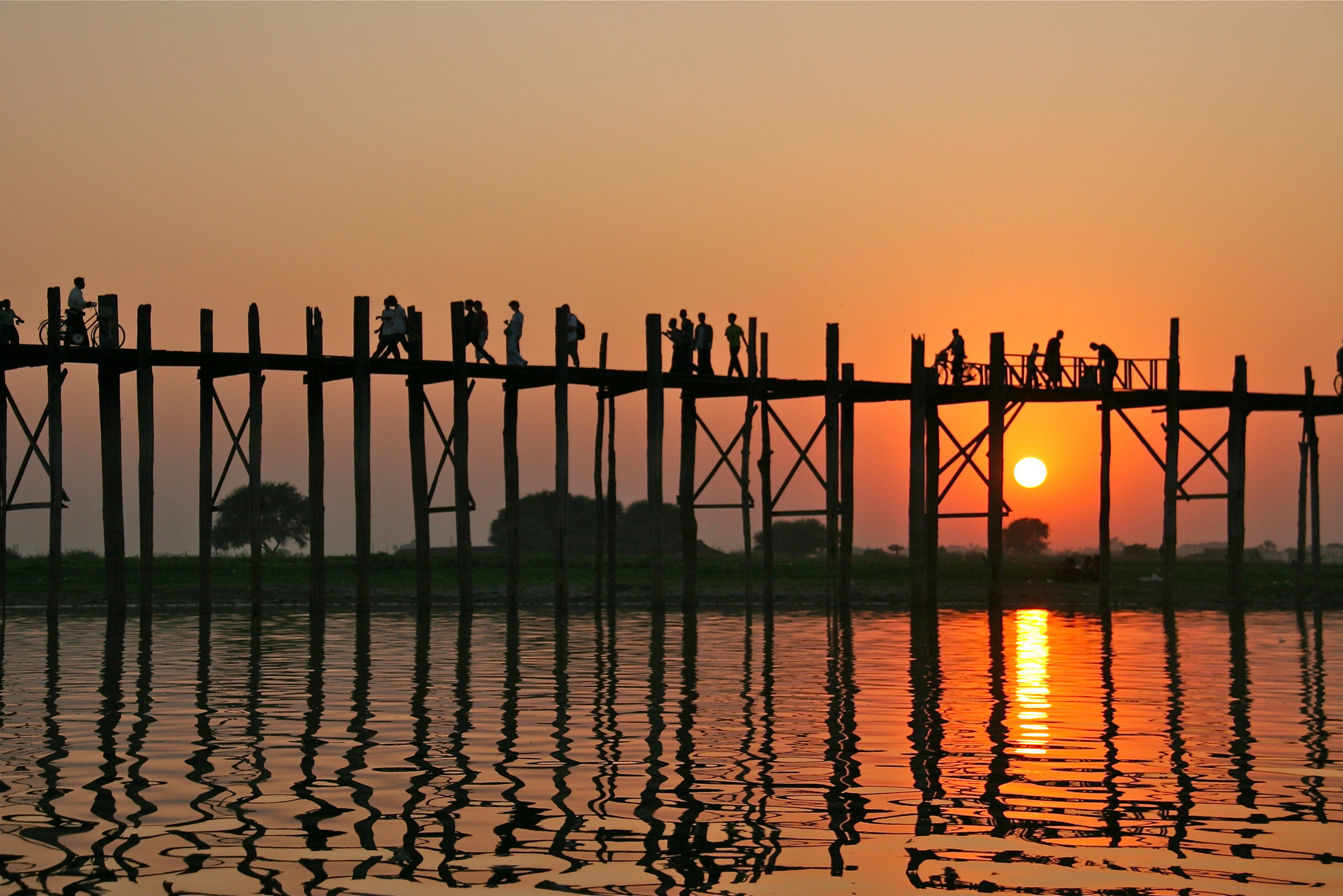
In the city of Amarapura (Burma), we find U Bein Bridge, a spectacular structure above Taungthaman Lake. Built from teak, this bridge is 1.2 km long. At dusk, walking along the bridge surrounded by calm waters is truly impressive. So much so that it is one of the places we recommend for experiencing a a cinematic sunset.
3 – Victoria Falls Bridge (Zambia – Zimbabwe)

Inaugurated in 1905, this steel arch joins two countries, Zambia and Zimbabwe. It is 156.50 metres long and stands 128 metres high, carrying pedestrians, trains and vehicles every day. The construction of Victoria Falls Bridge was championed by Cecil John Rhodes, who wanted the bridge built “where the spray from the falls splashes the train carriages”. Interestingly, it was opened by George Darwin, Charles Darwin’s son. Today, walking across it is a spectacular experience.
5 – Khaju Bridge, Iran

Built around the year 1960 by order of Persian king Shah Abbas II in the city of Isfahan, this bridge is 126.5 metres long, with 24 arches spanning the Zayandeh River to unite the neighborhood of Khaju with the Zoroastrian. It is obvious that the qualifier of bridge doesn’t quite do it justice, as it is more like a building. Over its history it has served as a public meeting place and a teahouse, among other things. At the top of the central pavilion, you can still see the remains of an old throne, built so that Shah Abbas II himself could admire the magnificent views. This structure is undoubtedly a marvel of Persian culture, defined by the archaeologists Upham Pope and Jean Chardin as «the culminating monument of the architecture of Persian bridges and one of the most interesting bridges existing ... where the whole has rhythm and dignity and combines in a happy coherence, usefulness, beauty and recreation».
6 – Ōnaruto Bridge, Japan

The suspension bridge of Ōnaruto-kyo is a structure that connects the Awaji Island with Naruto, Tokushima. Completed in 1985, the bridge now carries an average of 18,600 vehicles a day. Despite being one of the largest bridges in the world, the main attraction lies in the waters it spans rather than the bridge itself. The current created where the Seto Inland Sea meets the Pacific Ocean produces impressive whirlpools, from which we have discussed before.
7 – Faidherbe Bridge, Senegal
The Faidherbe Bridge rise above the River Senegal to connect the island of the city of Saint-Louis with the African continent. This metal giant is 507.35 metres long and a great source of pride for the people of Saint-Louis. Its construction followed an increase in trade on the island, which the existing ferries could no longer handle. Governor Louis Faidherbe recognised the need for a bridge and championed the project. It opened in 1897 and eventually took his name.
At this point, we realise that each bridge is a cultural expression rooted in a particular moment in history, a particular place and a specific purpose. So, although they all serve the same function, they are very different. Which would you choose?