At the start of the European summer, rivers in the Amazon basin have risen by up to 15 metres vertically, flooding the valley and the humid tropical forest. Those who travel to the Amazon at this time will find a unique landscape, very different from the months when the water level is low.
Travelling through the Amazon in summer means high water and flooded forest: the igapó
Rainfall and snowmelt from the Andes increase the volume of water flowing through the Amazon’s rivers, spreading across the valley. This water takes months to go down and travel the more than 7 thousand km of main river, which is born in the Andes and flows into the Atlantic, crossing practically the northern part of the South American continent.
Because of its length, high- and low-water conditions occur at the same time in the upper Amazon and at its mouth in Belém do Pará.
Visitors arriving in the Amazon at high water discover not just a river but a vast water system.
Travelling to the Amazon in summer: June, July and August

The Amazon River enters Brazil (as the Solimões) at 80 metres above sea level and drops to 60 metres by Manaus. This slight gradient allows it to reach widths of almost 100 km in places.
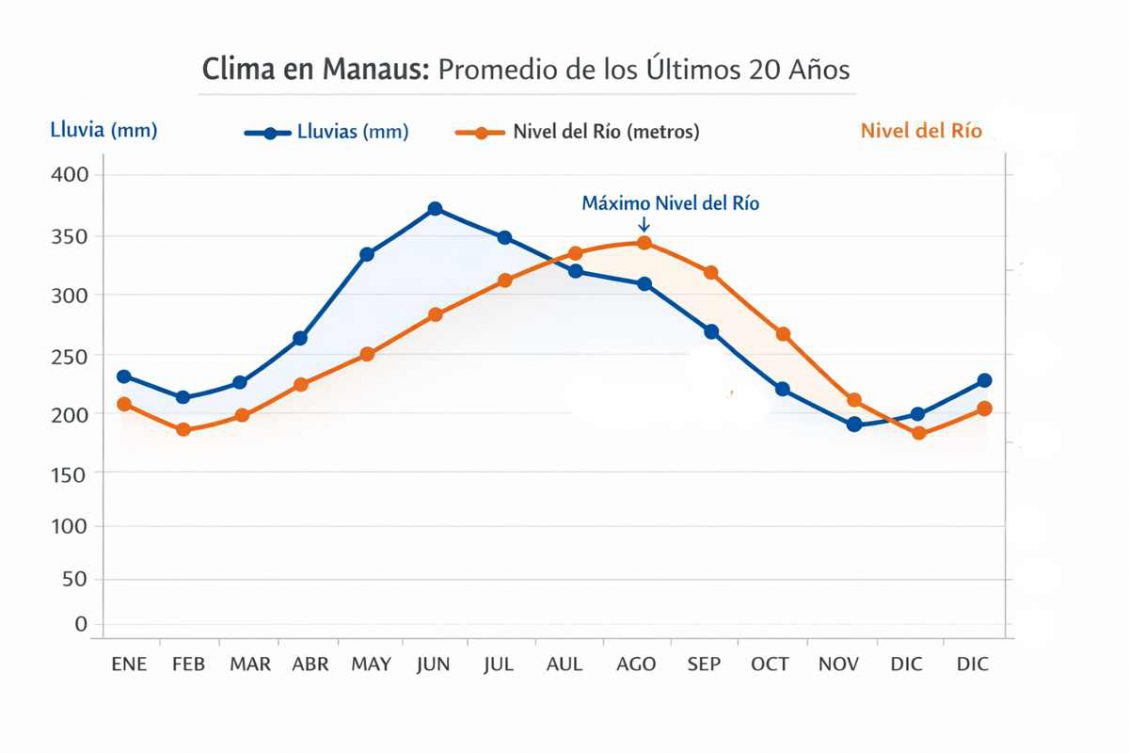
As it passes Manaus in June, at the start of summer, the water reaches its highest level.
The port of the city of Manaus, capital of the Amazon and starting point of our expeditions through the Amazon, is a floating structure that annually accompanies these ups and downs of the water level.

This port was built during the rubber boom to operate year-round and was, for many years, one of the most important ports in Brazil and all of Latin America. At the port terminal, a wall marks the highest historical water levels. In some years, water reaches the city centre through drains or overtops the retaining wall.

Outside the city, water floods the rainforest during the high-water season. Large trees withstand the flooding, while many paths and tracks disappear underwater, making boats and canoes essential for getting around.
Rivers are the region’s natural highways in the absence of roads. The few roads built have been swallowed by vegetation and become impassable for commercial traffic.
The Rio Negro, where we sail, follows this flood cycle, and the natural park of the Anavilhanas Archipelago , too.

During high water, rivers and tributaries are easier to navigate, but their depth must be known to avoid running aground. On our trips, a local river pilot accompanies us, familiar with every channel in both high and low water.
In high waters you can dock on the shore or simply tie the boat to a tree or branch that has been submerged.
When the forest floods, there is no better way to experience nature than a canoe trip through the igapó among immense, half-submerged trees.

The Amazon at high water: the igapó
Igapó is forest flooded by blackwater, which is more acidic and nutrient-poor.
In the forest, this phenomenon governs life for riverside inhabitants. They build floating homes on large, buoyant tree trunks that rise and fall with the water, preventing flooding during high water.
In times of high water, the igapo offers conditions that facilitate exploration.
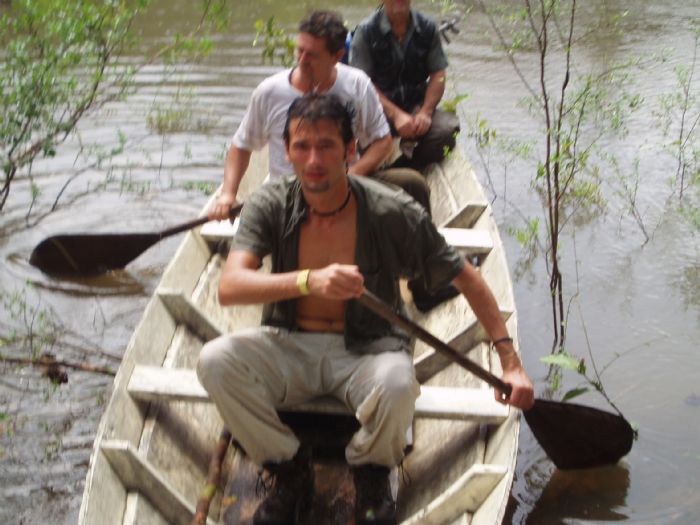
With less dense vegetation than várzea — forest flooded by sediment-rich water — the forest interior becomes more accessible. Trees grow further apart, and broad stretches of water allow us to explore by canoe.
Sailing among submerged trunks and roots, we reach places inaccessible on foot during the dry season. The peaceful journey allows close views of Amazonian flora and fauna: birds sheltering in trees, fish and insects in unimaginable shapes and colours.

Fish is the staple food of riverside communities. At high water, fish leave the main channel to feed on fruit and seeds in the flooded forest, making them harder to catch.
Some areas never flood because of their elevation. Known as terra firme, they are where we will walk and observe flora and fauna.
For the boldest, an overnight camp in the jungle can be arranged!
Puranga Flow Project
A unique experience in the Brazilian Amazon, exploring the Puranga Reserve, Anavilhanas Islands and Apuaú River. Travellers meet riverside communities, walk in the jungle, canoe and observe local wildlife and plants, with the option to camp in the forest. The trip also visits the Puranga Flow project, which focuses on protecting the ecosystem with support from local people, institutions and private initiatives.
A journey that connects you with the essence of the Amazon and allows you to be an active part of its preservation.

More than 30 years ago, Viajes Tuareg began organising Amazon expeditions, exploring a fazenda that was gradually reclaimed by the jungle and became part of the Puranga Sustainable Development Reserve.
Under the Federal University of Amazonas’s direction, scientists study the Amazon turtle (tracajá), observing nesting areas and monitoring hatchlings. Visitors can not only learn about this natural cycle but experience it first hand, helping release newborn turtles and monitor nests.
An example of how conservation and development can walk together, protecting biodiversity and benefiting local communities.
Travel to Brazil Summer 2026
 Brazil