Easter 2027: five trips in Europe and beyond
Five trips for Easter 2027: from the Baltic States to Cappadocia, the Caucasus and Central Asia.
The Silk Road is a network of routes that connected East and West for centuries, bringing together the cultures, religions and landscapes of the two hemispheres. Today, that network offers travellers many possible journeys.
Four countries to choose from. No itinerary is better than another; what matters is the one you are looking for right now.
The Silk Road is not just a historical legacy; it is a mosaic of cultures difficult to fit into a single itinerary.
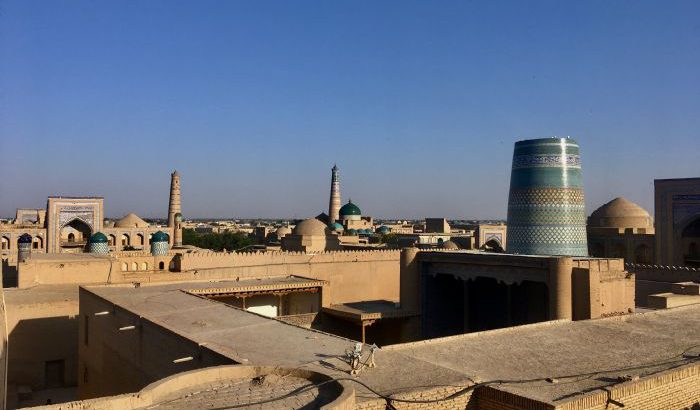
For centuries, traders and nomads crossed deserts and mountains to connect East and West. Today, that magic lives on in Central Asia's turquoise tiles, yurt camps beside alpine lakes and the contrasts of the Caucasus.
The Route of Thirsta was a network of trade routes that emerged in the 1st century BC in response to strong demand for Chinese silk. Starting in Chang’an (now Xi’an), China, its many routes stretched across Asia, eventually connecting with Europe and East Africa.
Two neighbouring nations with distinct cultures and cuisines, both with incomparable heritage and beauty shaped by centuries of trade in textiles passing through their lands on the way to East Asia.
Do you know the differences between Kyrgyzstan and Uzbekistan? What will be the destination of your trip?
Meet the Kyrgyz, the nomadic people who travel through the valleys and mountains of Kyrgyzstan along with his cattle.
Kyrgyz society has historically been organised into clans and family tribes. The yurt has traditionally been the home of nomadic Kyrgyz people and remains important in their culture. Their extraordinary hospitality gives us a chance to learn about life in their camps and discover how they carry out daily tasks in traditional ways.
Autumn is one of the best times to travel the legendary Silk Road. With pleasant temperatures and fewer travellers, we can explore its historic cities comfortably and in depth. We have prepared special departures for those who want to discover the Silk Road without the crowds and summer heat.
Discover the Silk Road. Travel to Uzbekistan, Kyrgyzstan and Azerbaijan in autumn.
From the grandeur of the ancient Silk Road cities to the desolation of the Aral Sea and the Kyzylkum Desert. Uzbekistan and Turkmenistan offer a unique experience for travellers looking to explore the past.
Immerse yourself in the grandeur of the Silk Road and discover the magic of Uzbekistan and Turkmenistan before places sell out.
Situated between the Uzbek deserts and the Kazakh steppes, Kyrgyzstan is popularly known as the “Switzerland of Asia”, home to two large mountain ranges such as Tien Shan and Pamir. Kyrgyzstan has always been a land of nomads, as shown by the many camps set up in the summer months, where we spend many nights during our treks.
Both end in “tan”, but what we find there is very different…
– UZBEKISTAN: A celebration of Islamic history and architecture along the ancient Silk Road. Desert and steppe landscapes
– KYRGYZSTAN: the Switzerland of Central Asia: nomads with their yurts, forests, an average altitude of 2000 m and the peaks of the Pamirs on the horizon.
Between the 20th and 22nd of June, the Earth's semi-axis leans toward the Sun. It's the summer solstice in the northern hemisphere, and daylight seems endless. Around the world, people celebrate the change of season with bonfires, festivals and different celebrations. In addition, it is a perfect time to travel because, if the world is a place worth discovering, it is even more so when the days are so long and people are happy and celebrating. These are some destinations that we have chosen to get carried away by the magic of summer.
The Lake Issyk-Köl (Ysyk-Köl, Issyk-Kul) is the second largest alpine lake in the world after the Lake Titicaca in South America. The name, which means “hot lake”, is something of an exaggeration. A combination of great depth, thermal activity and mild salinity ensures that the lake never freezes, even in the harsh winters of Central Asia, despite being at an altitude of more than 1600 m.
The lake's origins are unknown, but the existence of a city built in the 5th century BC, submerged by flooding caused by an earthquake in the 16th century, has been demonstrated. Underwater expeditions over the years have found coins from that period.